By Sarah Brewer
Before we get into the interview, if you find yourself interested in checking out Robert Gow’s latest project, Real Verdicts, it can be found on Fibe TV1’s Channel 1 and on the Fibe TV app.
Sarah: What kinds of stories do you find yourself returning to, and why do you think they resonate with you?
Robert: When I got into this, I liked the idea of a career exploring all the different aspects of being a human being. At this point, I've done about 40 or 50 short documentaries, and I feel like I've been able to explore quite a bit.
So, in that context, I'm always drawn to trying to examine different people's psychology who have either lived through very unique experiences or are part of various subcultures, whether they be, you know, police officers or criminals or people who have dealt with very intense medical issues. In exploring these different people's psychologies, I find I'm very frequently brought back to their familial dynamics, how they relate to their own mortality, what their dreams were as a child and how those dreams reflect who they are today.
It's funny, when I go into making a project, those aren't necessarily the themes I'm thinking. However, when I look at the final cut, those tend to be the things I always come back to because I find those to be the most interesting.
Sarah: What project has challenged you the most, and what did it teach you?
Robert: Every project I've done, I always try to bite off more than I can chew — I like feeling challenged and stressed, and I like pushing myself. So, at any given moment, every project I took on felt like this super difficult, challenging task. That being said, I feel like my most recent series, Real Verdicts, is the one that I grew the most from as an artist.
Over my last few projects, I started appreciating that I am the media, and therefore I have access to things that I never thought in a million years I would have access to. In Real Verdicts, it was really me pushing myself as a producer as far as I could go: who are the people who will agree to talk to me, who are the institutions that might agree to be on camera, and where are the places I can go.
So, amongst those, we filmed an episode inside of Dorchester Penitentiary with a man who had been convicted of second-degree murder in which he gave us a tour of the whole facility. We did another episode with an RCMP officer where we got to film in the station and drive around in the car. Then, we were able to get former gang members to talk on camera and all these sorts of things, and it just really expanded my understanding of what me as a documentary filmmaker could actually pursue.
Sarah: Were there any stories featured in Real Verdicts that challenged or surprised you personally during the research process?
Robert: What do you mean by research process?
Sarah: I really want to know a little background on what you do before you start reaching out to people; I'd love to hear about what goes on behind the scenes.
Robert: It varies from subject to subject. I'm always looking for people to talk to. So, with anyone who's talked to me for more than 10 minutes, I'll probably be like, “Hey, do you know anybody who might be willing to talk on camera who might have an interesting story?” So, I'm always doing that. I'm always researching topics I find interesting online to try to find if there are local people who have written books on a subject or that sort of stuff. So, for instance, Danny LeBlanc — who was a correctional officer who was responsible for handling things like riots and hostages — he had written a memoir a few years ago, which I felt like didn't get enough press attention, but I thought was incredibly compelling; I wanted to highlight him. Other people, I posted ads on Facebook, and they reached out to me directly. So, for instance, Tony Beare, who is currently a TikTok star, who used to be a member of the FOB gang in Calgary — who participated in the deadliest gang war in Calgary's history — he reached out to me. Other people, you know, Jeremiah, for instance, I met when I was filming Tony's episode, who was another man who was involved in a lot of criminal activity back in Ottawa. So, the research process is kind of all over the place and trying to find people, and not just find people, but also connect with people that I think would be good on camera and are willing to be vulnerable. I’ll talk to a lot of these people, first, on Zoom or we'll have coffee or something, and I'm trying to find people who are at a place in their life where they're willing to be honest about what they've been through; and a lot of people aren't actually at that place in their life yet.
The surprises to me in that process were just that certain people were willing to talk on camera and were willing to be so vulnerable. In terms of the actual shooting of the project, I thought it was very interesting how positively certain interview subjects talked about people on the other side of the criminal line. Danny LeBlanc had very nice things to say about a lot of the people that he met who were serving serious time in prison, and despite them doing some criminal acts and winding up in prison, they could still ultimately be good people who could get rehabilitated and re-enter society. Similarly, in the final episode where I talked to Sean Ryan, who had served 45 years in prison, he talks about how for the first few decades, he couldn't even see the prison guards as human beings; he could just see them as people who were keeping him locked up. It wasn't until he got older and more mature could he appreciate that these people had families of their own and had people they loved, and he could see the humanity in them.
I thought it was very fascinating to listen to people discuss people who they could hypothetically have an adversarial relationship with in a very positive way; I thought that was quite moving.
Sarah: It sounds like your research is very community-based: you're talking to people on the street, and you're reading literature by people in the province.
Yeah, I have a stack of books; dozens of self-published novels from just different people in Fredericton and New Brunswick in general, and 99% of them don't know I'm reading them, but I have like a very impressive stack of just local memoirs.
Sarah: What role did research play in shaping the narrative of Real Verdicts, and how did you ensure the stories remained authentic?
Robert: In terms of research, I always try to have at least a working knowledge of the places I'm entering. When I went into Dorchester Penitentiary, I tried to find every article written about the institution in the last decade or two. Similarly, if I'm talking to somebody who has been involved in a gang, I try to read a lot about that gang; I’ll try to read a lot about the stuff they were getting up to. I’ll find different perspectives on it: I'll go to both sort of mainstream news sources and then random internet commentators on Reddit to try to get different perspectives. I don't necessarily think the random Reddit comments are as useful, but I think it's still interesting to get different people's perspectives on any given story I'm working on.
How do I ensure they are authentic? To me, it's a matter of entering these spaces, trying to make people feel comfortable with me so that they are open to being vulnerable and honest on camera. A lot of times when I'm interviewing people, we're chatting all day or for multiple days, and then I have to shrink everything they say into like a 10- or 20-minute-long episode — that can be quite a challenge. So, to me, ensuring that, even though I am shrinking a big story down, I'm not taking anything out of context, and everything is still true to what they were saying. That's also very important to me.
Sarah: Documentary filmmakers often carry a responsibility to represent real people with care. How did you navigate the ethical considerations involved in telling these stories?
Robert: Something that I like telling people when these conversations come up is that I'm not interviewing people who don't want to be interviewed. I think that's an important thing to say. I've had friends talk to me about their own projects and they're like, “It's going well, but this person who I really need to talk to doesn't like answering questions, or doesn't like being on camera.” To that I go, “Yeah, you can't make them. If they don't want to talk to you, they're not going to talk to you.”
The first step is trying to find somebody who's at a place in their life where they feel comfortable talking about these things and can do it in a very forthright manner, as opposed to surprising people on camera or asking questions they don't want to answer, that sort of stuff. Generally, before I interview someone, we'll talk for a little bit and I'll explain, “If I ask you a question and you don't feel comfortable answering the question, there's no pressure to answer a question.” Similarly, we're trying to have a very relaxed atmosphere here — I'm at the place in my career now where before someone talks to me, they can go back and watch all my own work and decide whether or not I make the type of films that they would want to participate in.
When I'm going into these conversations, the people are aware that they're there to talk about very serious things, and it's not shocking to them. A lot of people will share very personal and very traumatic things they have been through, but they want to share that with the world; it's not as if I'm prying these things out of these people. It's very important to always approach this sensitive material with a sense of empathy and compassion, because all my subjects are really putting themselves out there, and I get that that's a very courageous and difficult thing to do. I have tremendous respect for these people — I feel like as I talk to them, and how I present them in the final edit, the subjects can feel that respect.
I've never had anybody angrily walk away from an interview. Similarly, I would say people will answer 99.9% of the questions I ask. The only exceptions are sometimes people will be like, “Oh, that actually might implicate someone or involve someone else that doesn't want the story told publicly.” Those are really the only times people won't want to talk about things; but generally, walking into these sorts of interviews, people are like, “No, I'm at a place in my life where I want to share stuff,” whether that be traumatic or not.
Sarah: What conversations do you hope Real Verdicts sparks among audiences?
Robert: The aim of Real Verdicts was to create very honest portraits of different people who are involved in different aspects of the criminal justice system; and to me, I was always trying to paint them in a very honest light, both good and bad with some of the people involved. How people take that honesty is ultimately up to them. However, I do hope it fosters a sense of empathy.
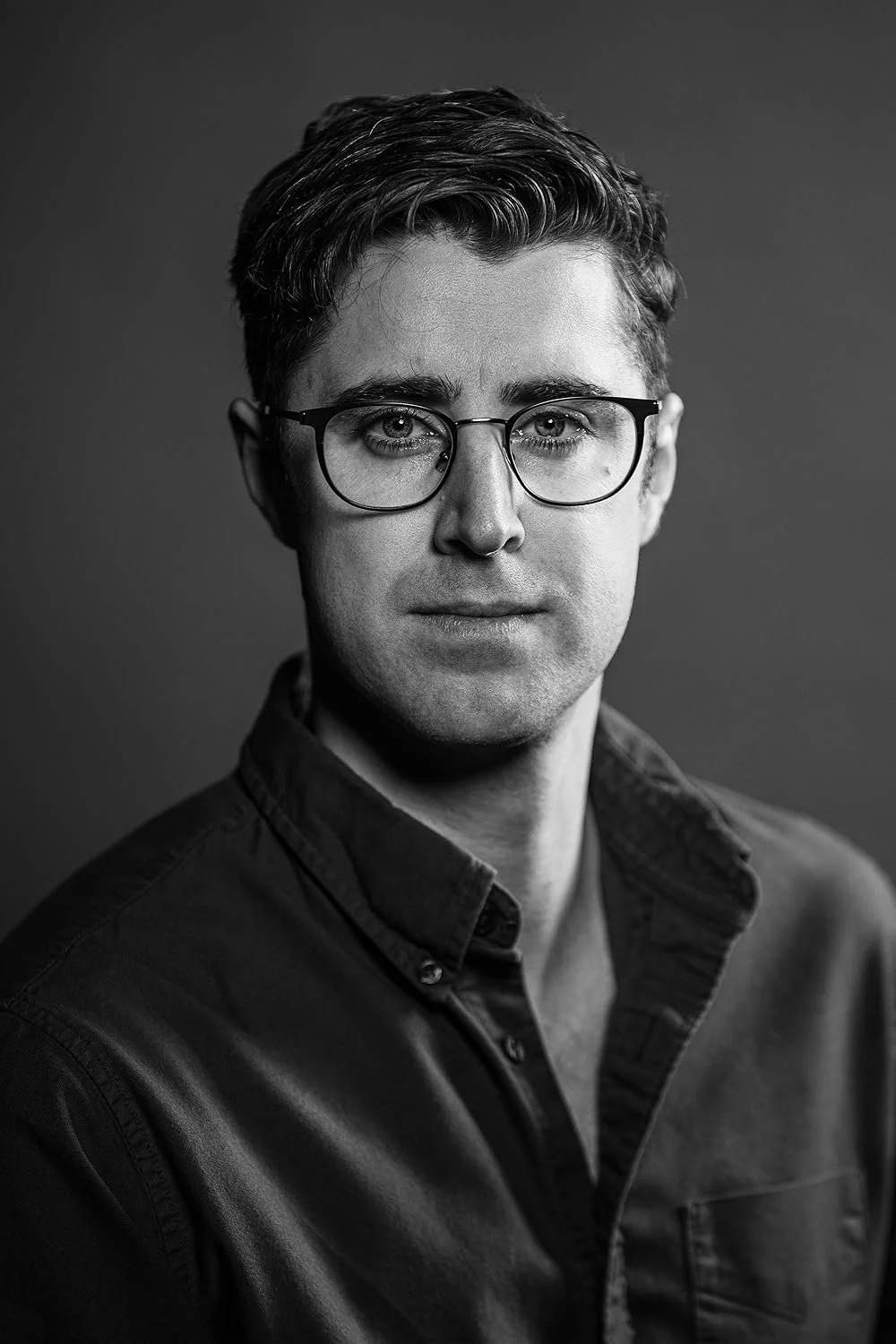
Robert Gow