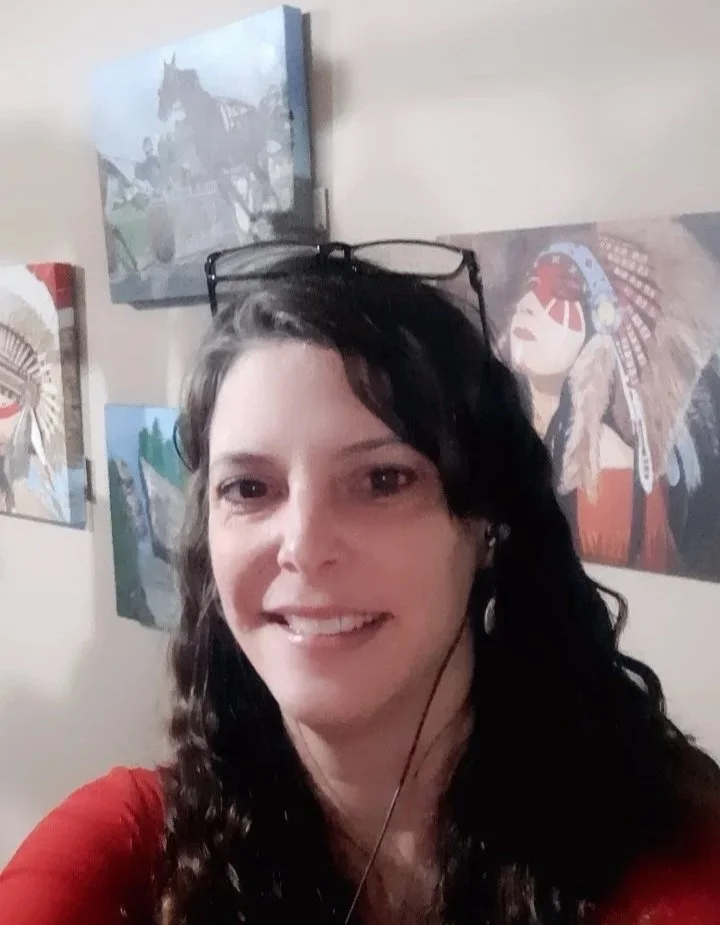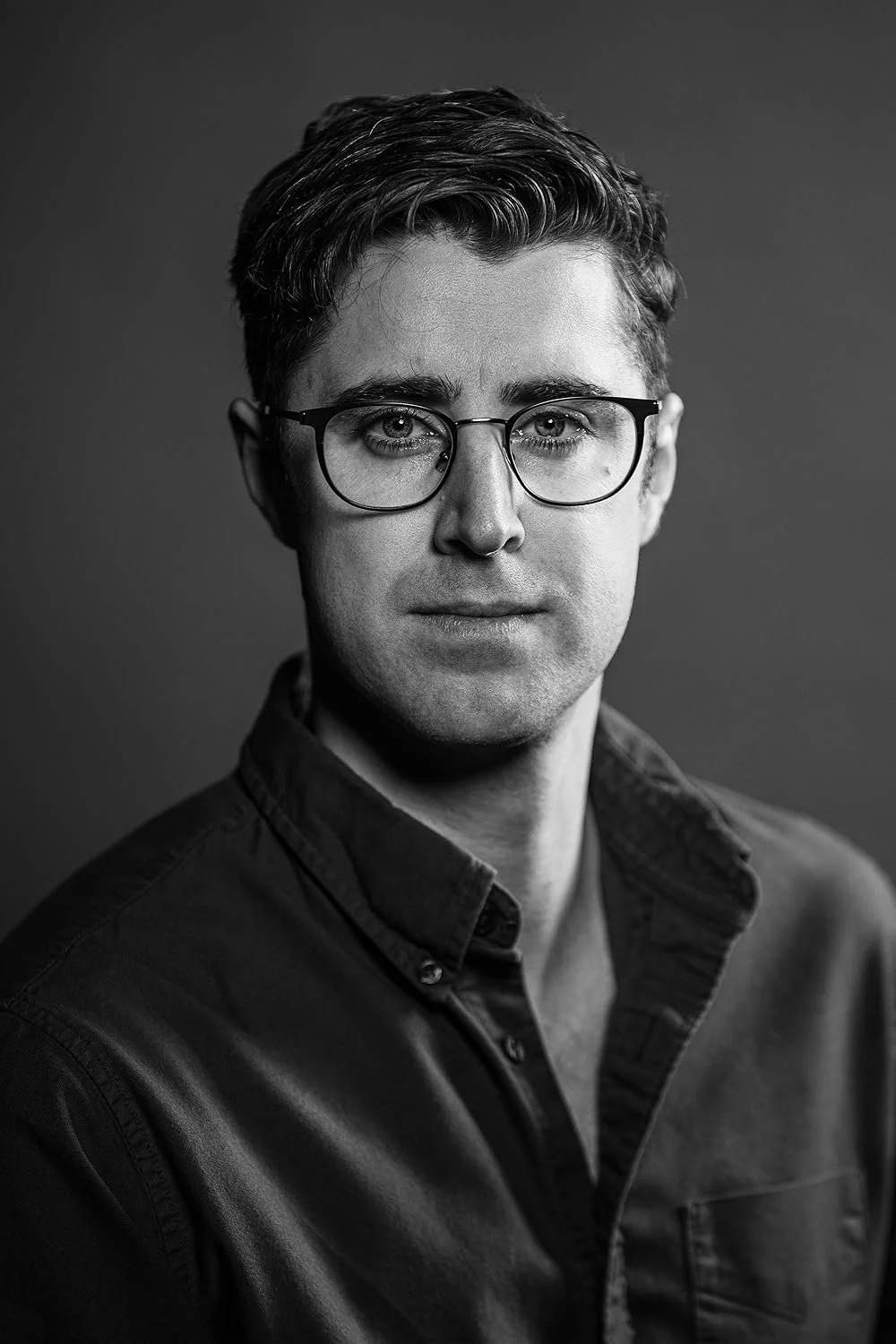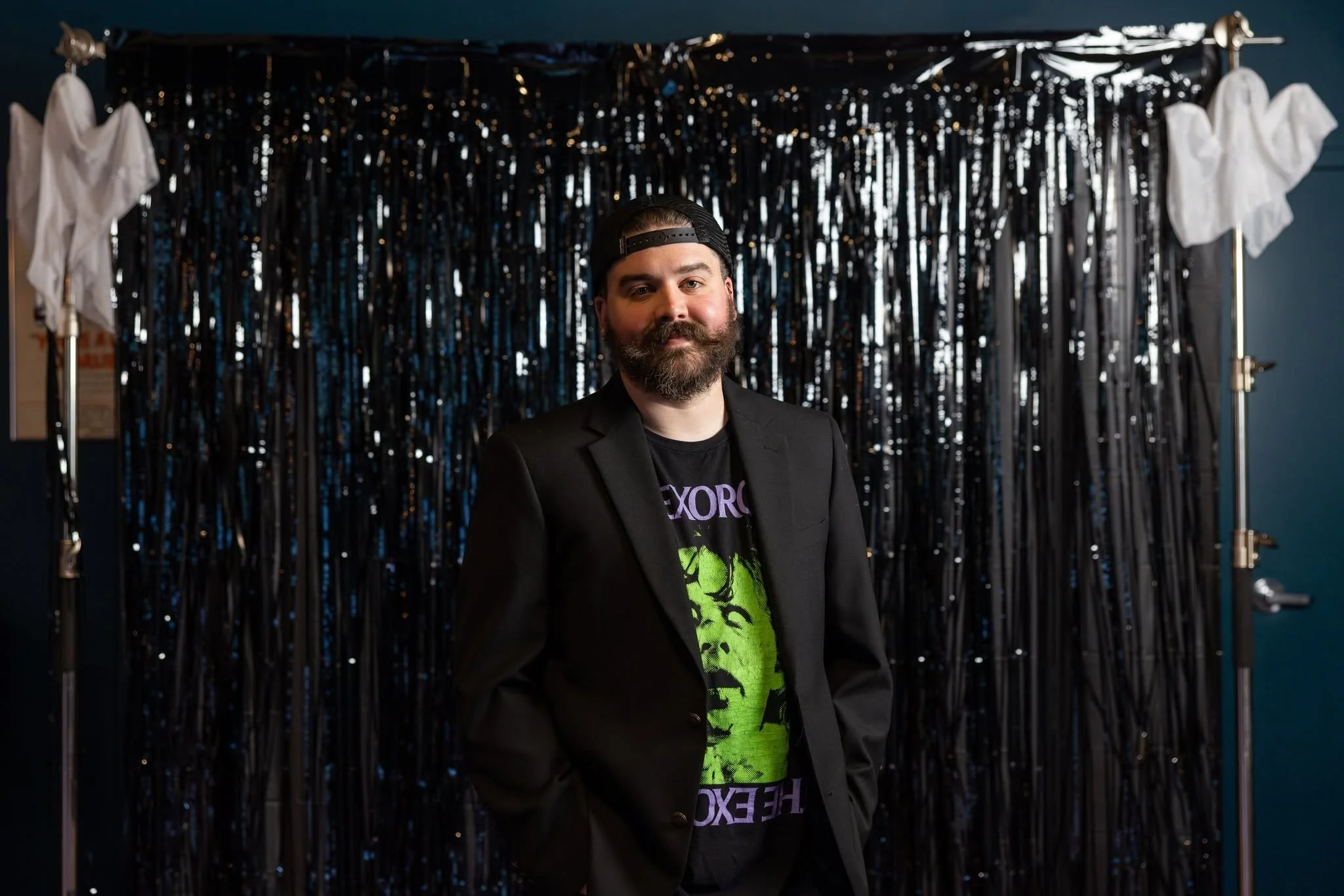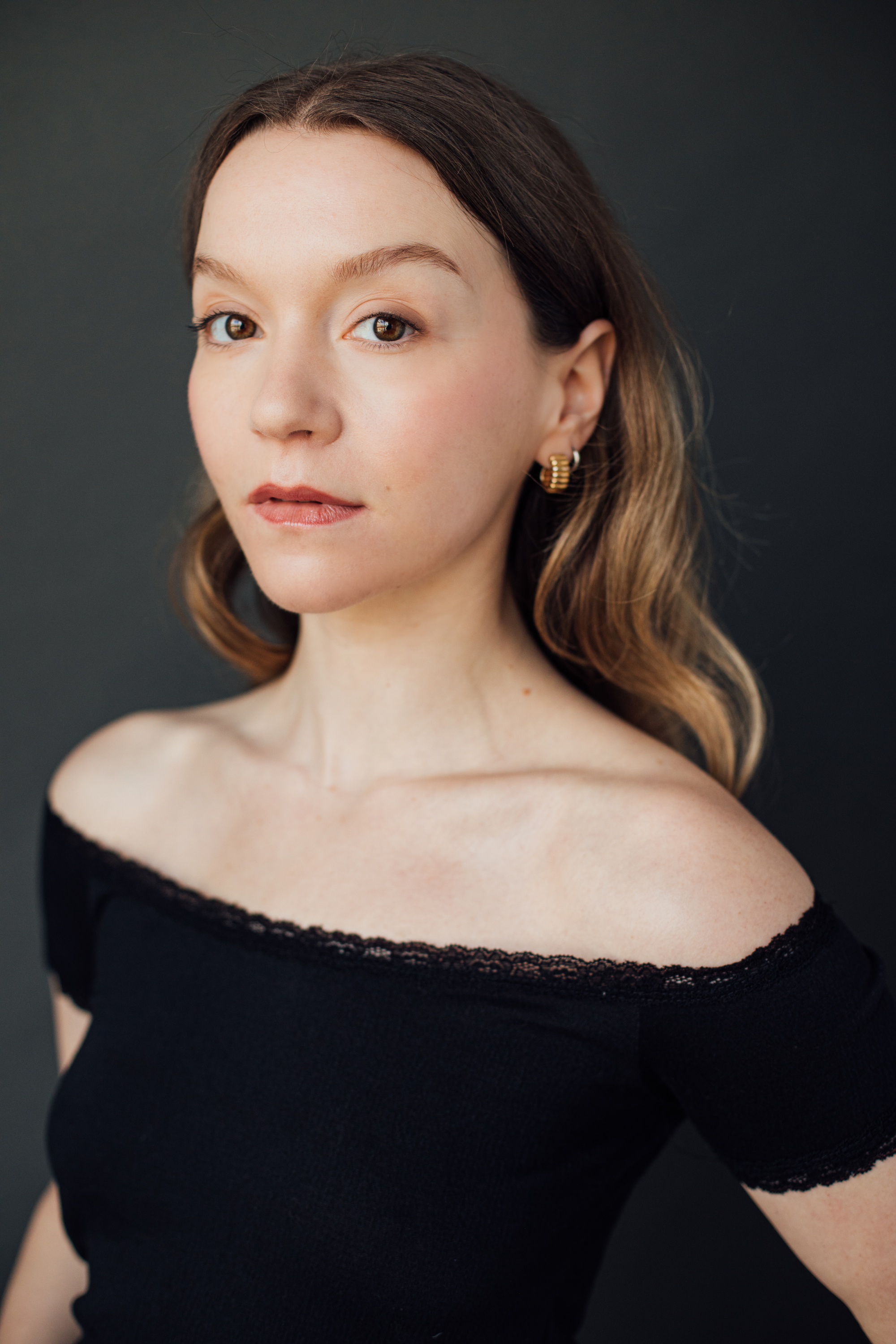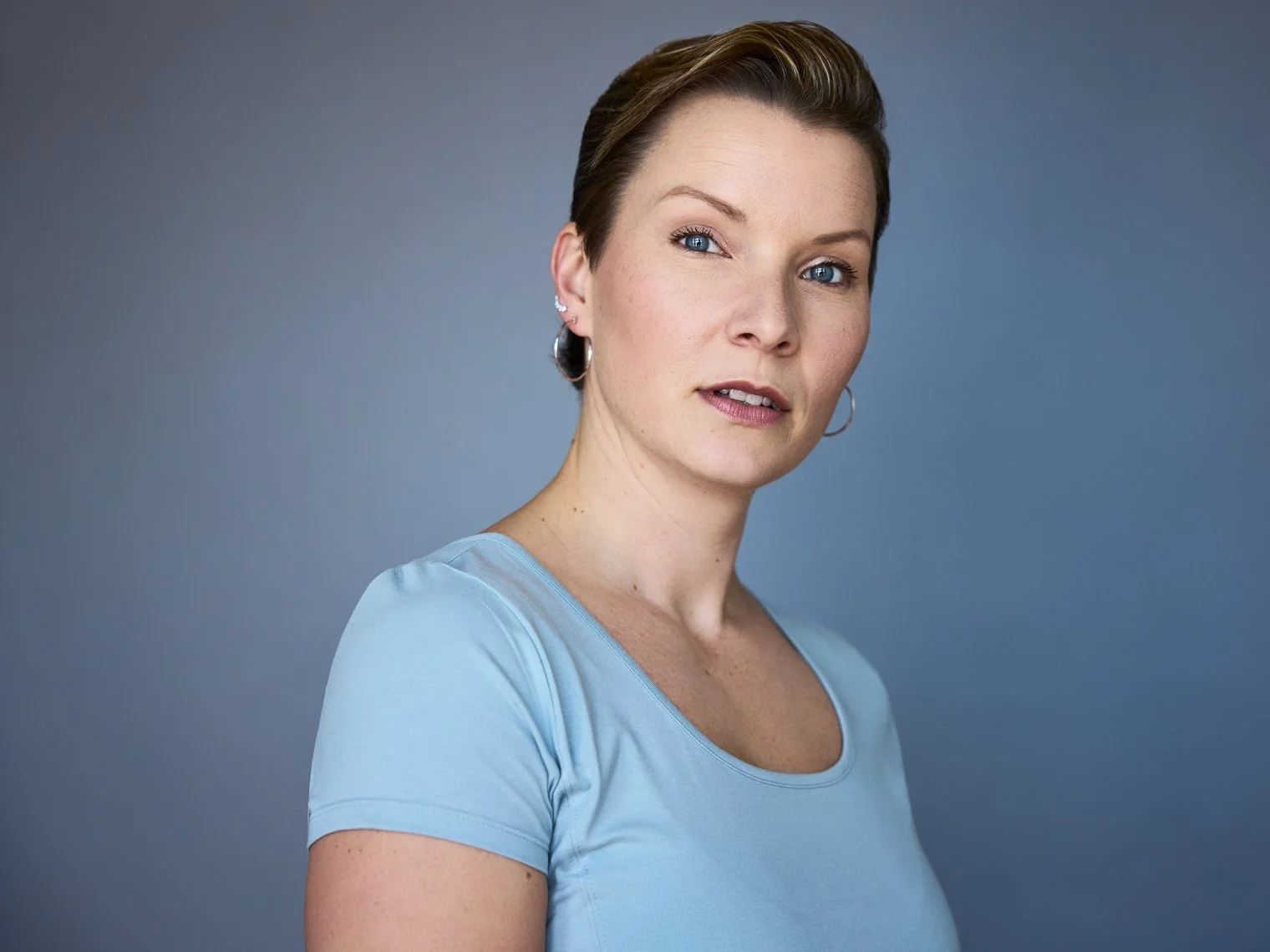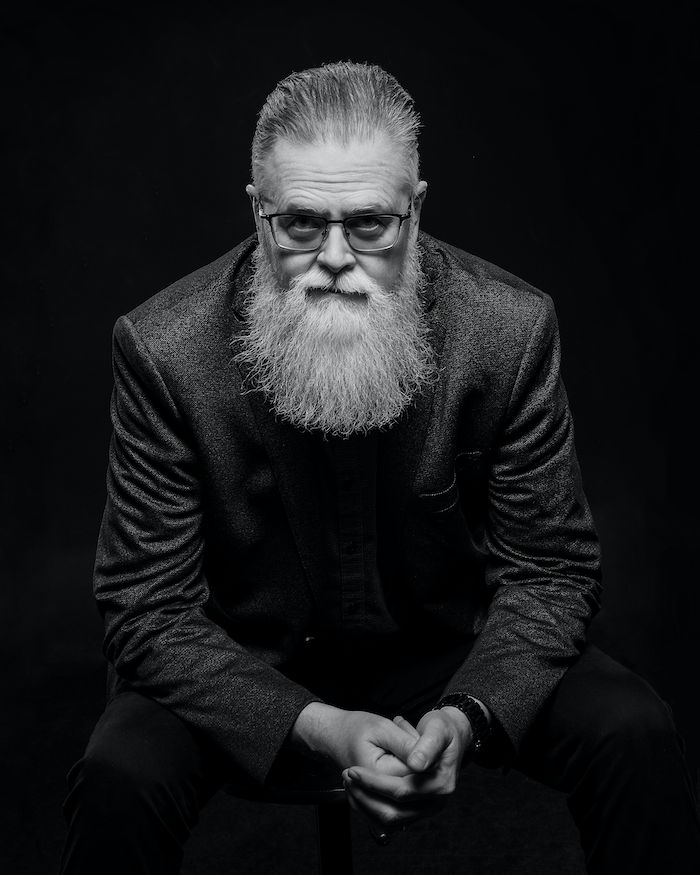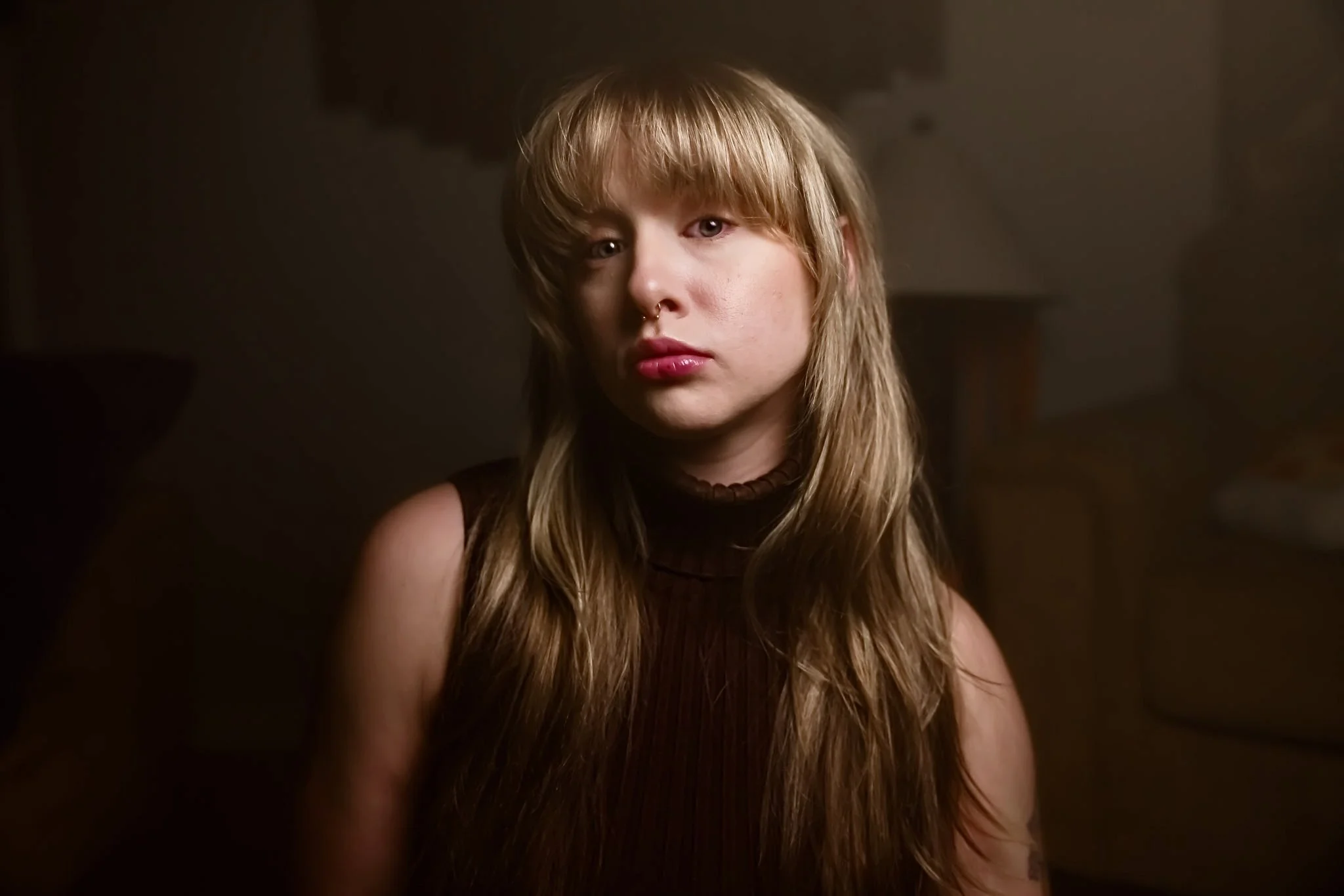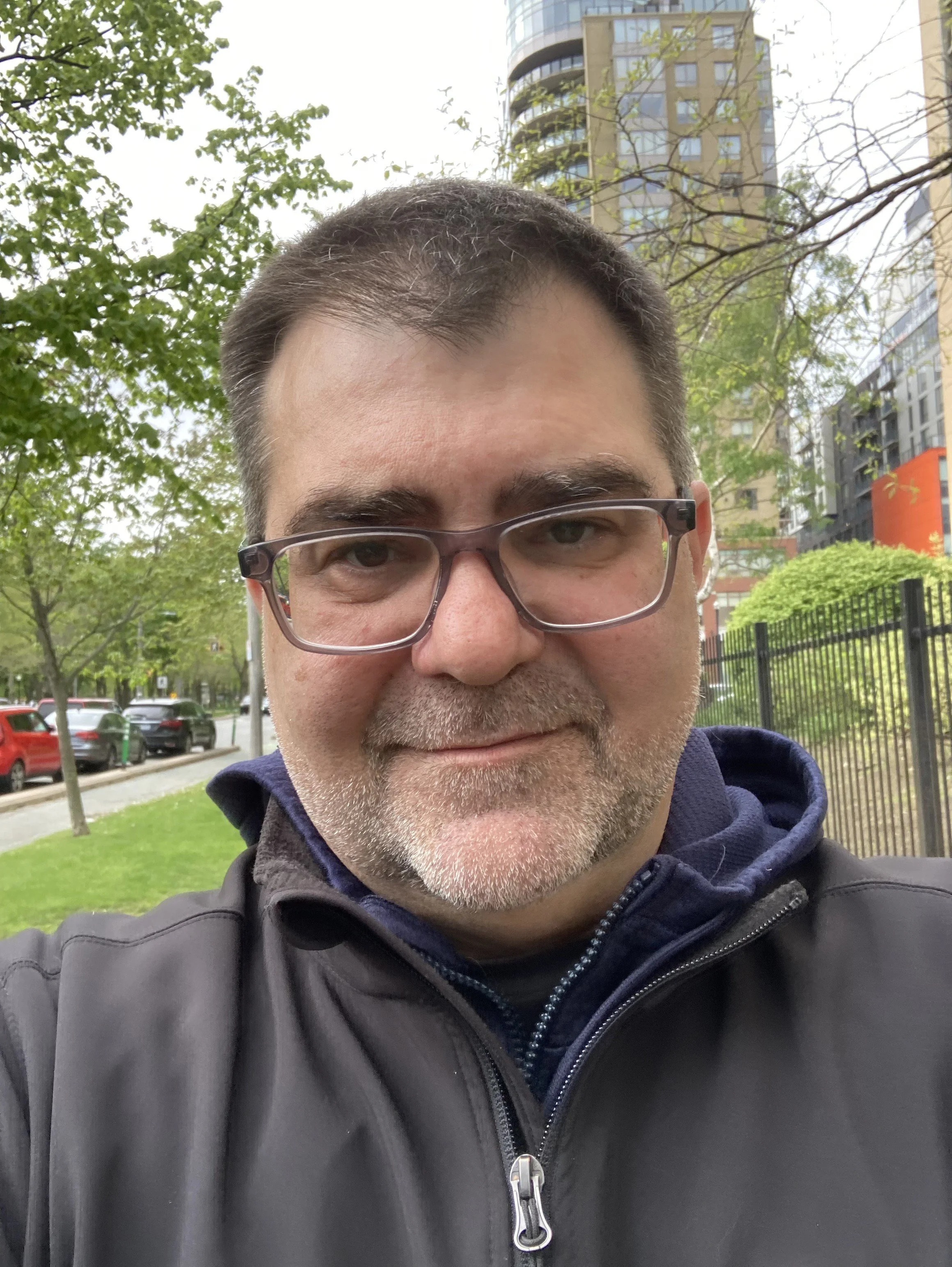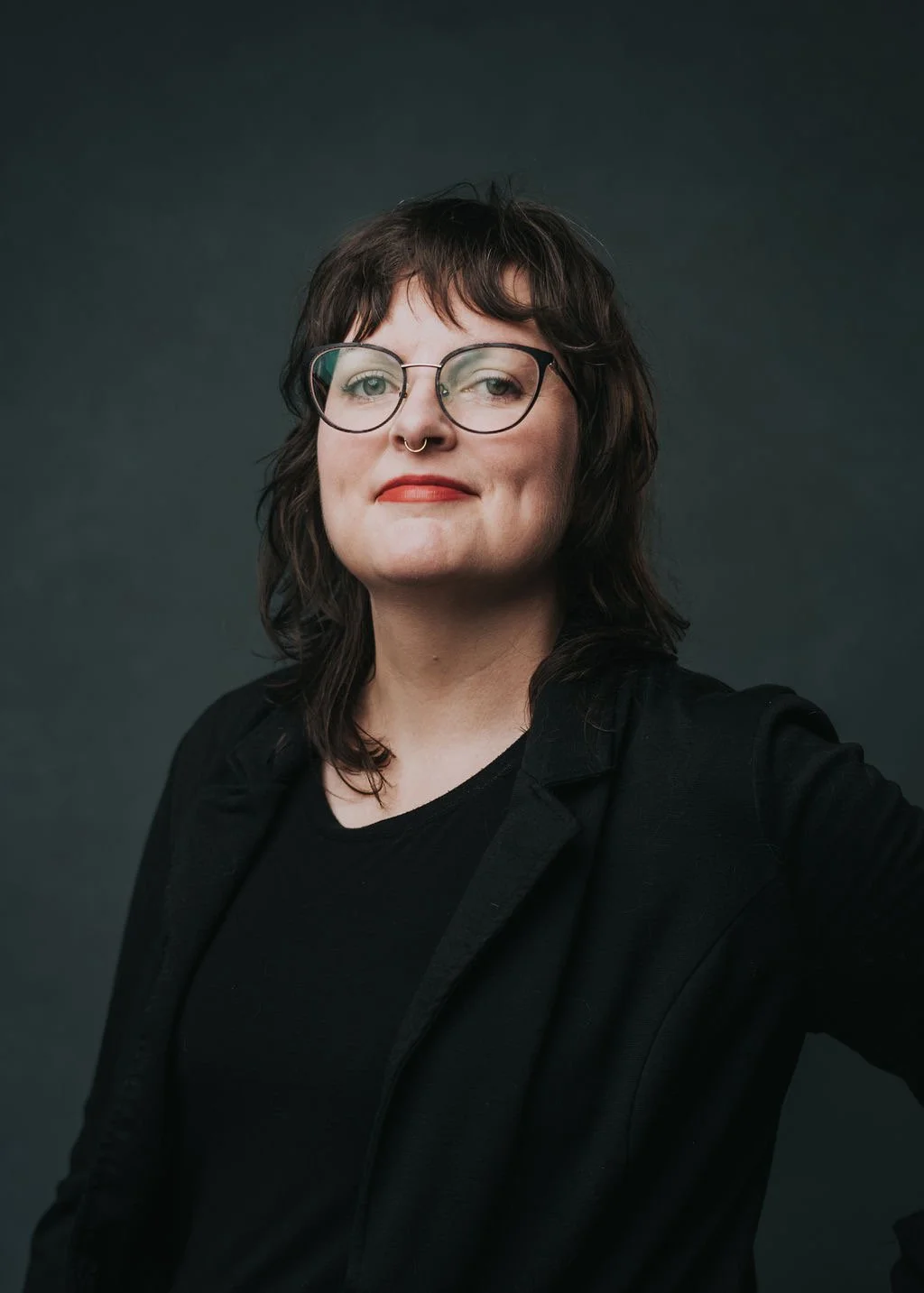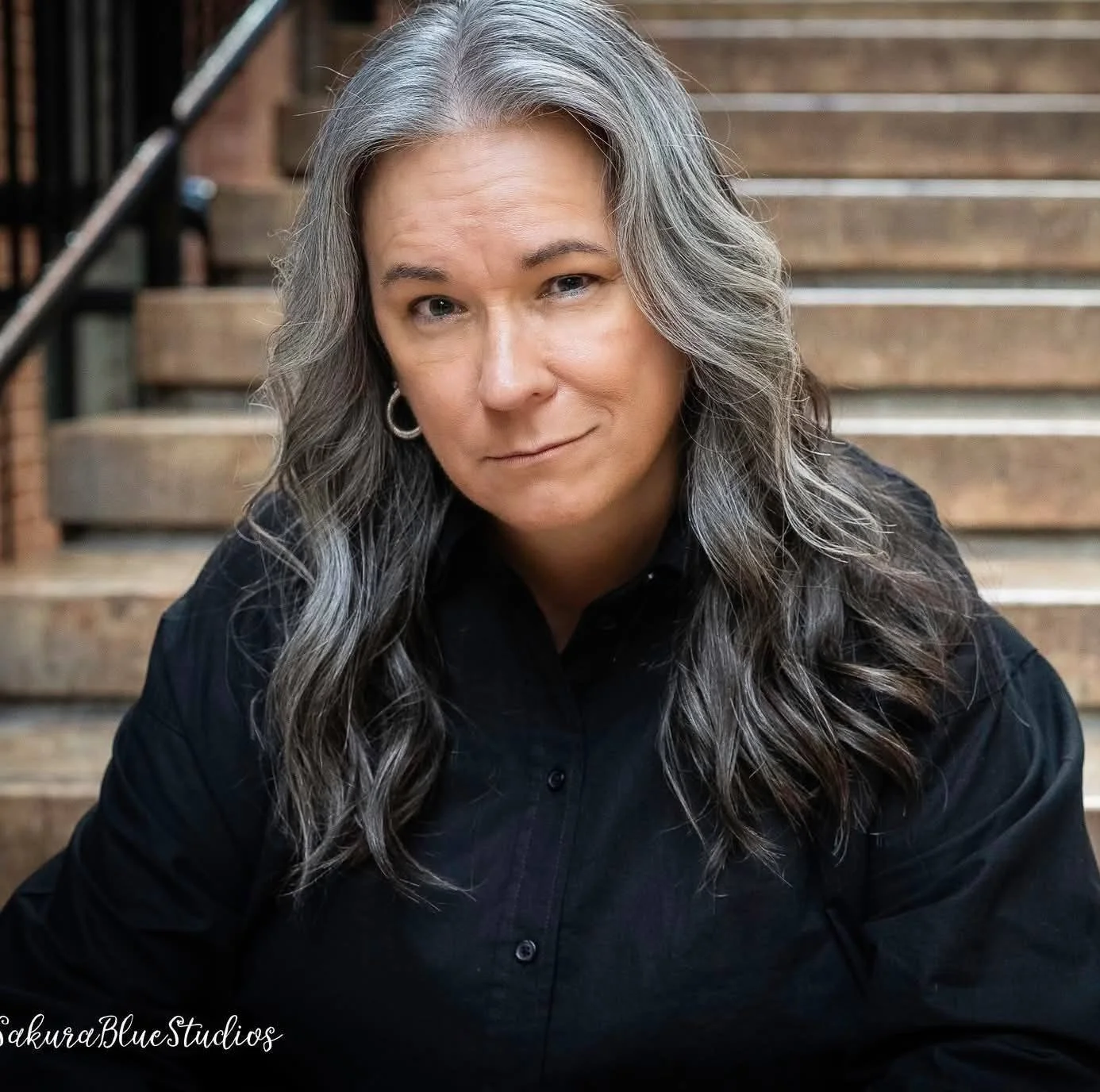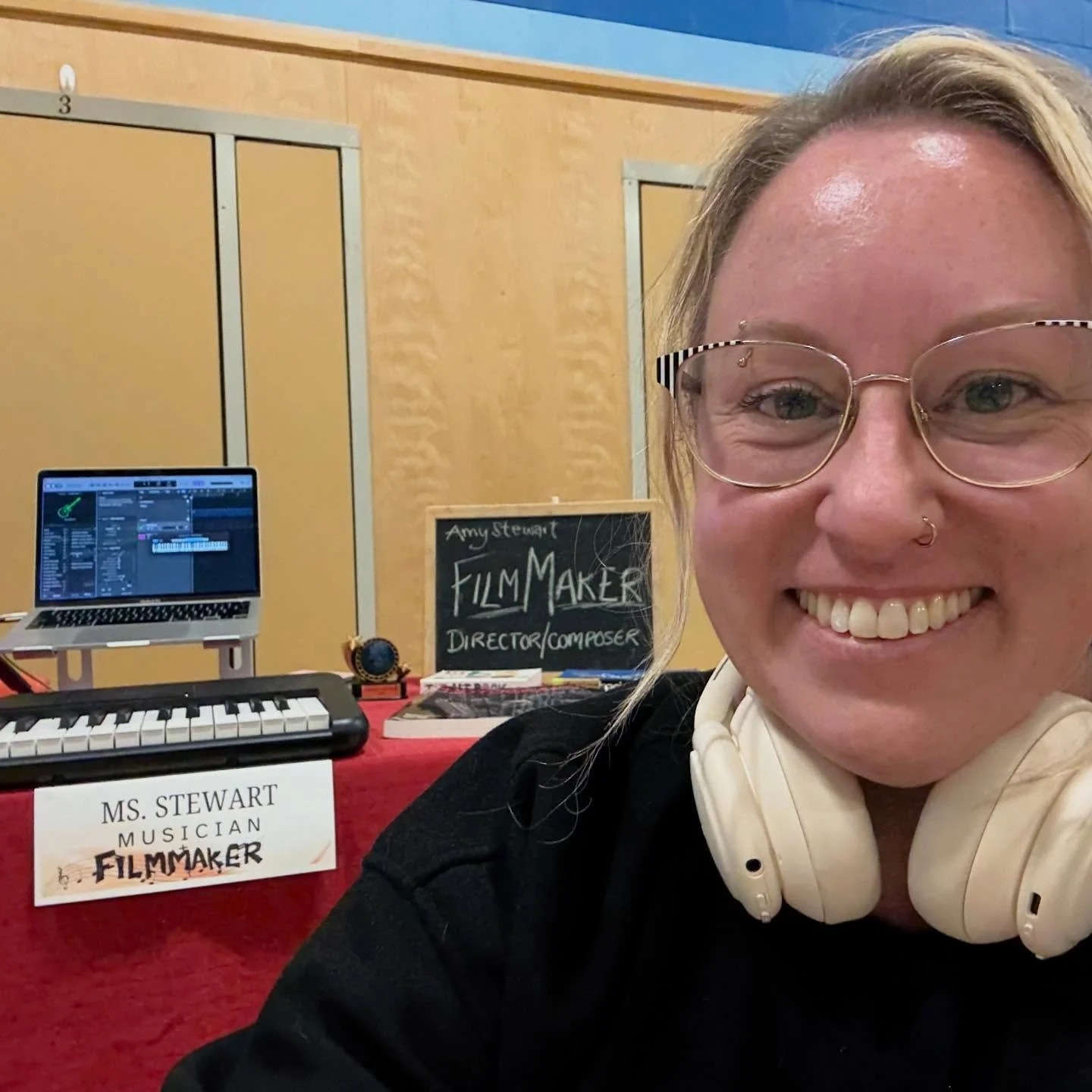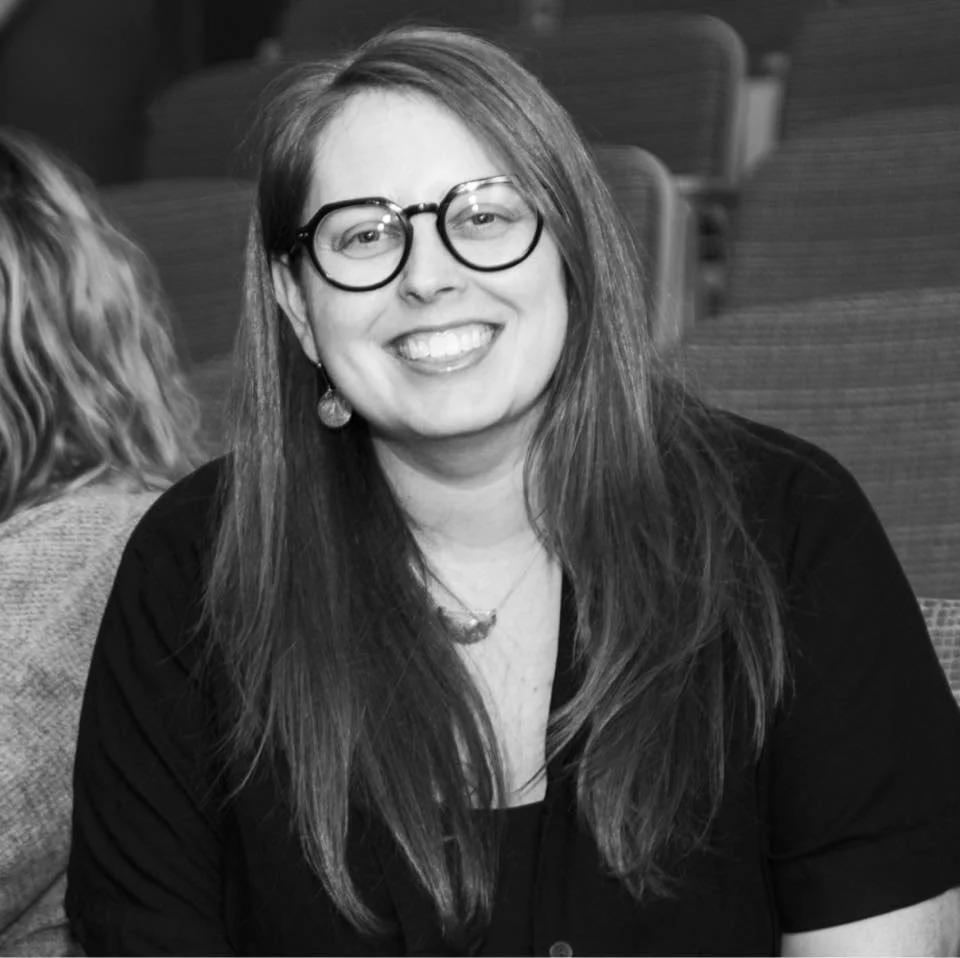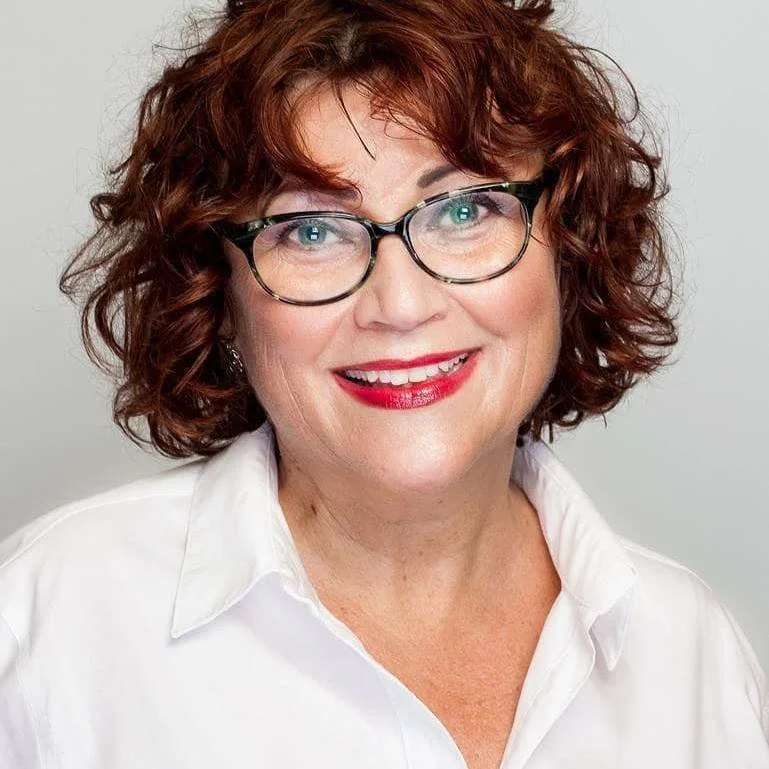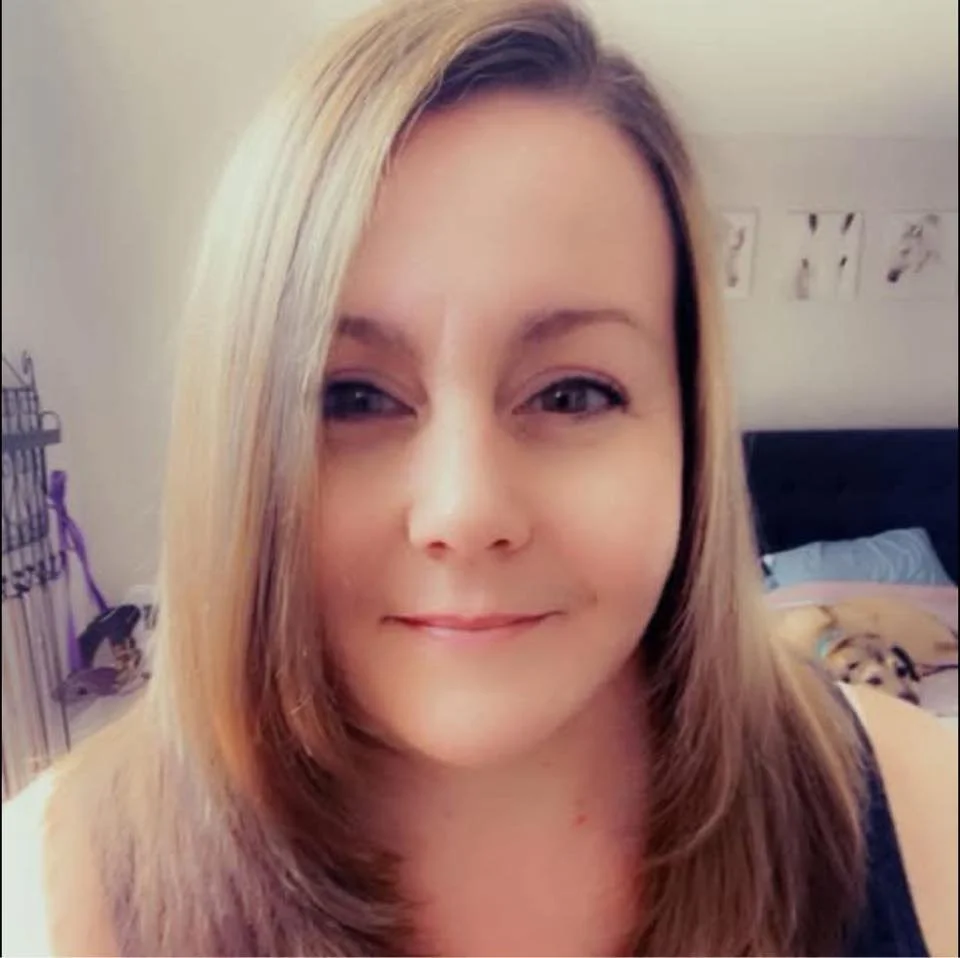
Create Boldly, Support Authentically: A Conversation with Rebecca Carrigan

By Tyler Hanley

1. For those who may not know your work yet, can you tell us about your creative journey and what led you to found Sakura Blue Studios?

My creative journey began in childhood. My parents encouraged both artistic exploration and athletic pursuits, enrolling my brother and me in a wide range of creative workshops. I immersed myself in everything from visual arts and creative writing to photography and adventure programs. I also studied piano through the Royal Conservatory of Music for 18 years and played on the Ontario Women's Softball team, which instilled in me a deep discipline and appreciation for storytelling through sound and teamwork. From an early age, I was constantly behind a camera — photographing family and friends and creating little films and shows. In high school, I performed in musical theatre productions, trained in singing, and later pursued a film acting course in college. After graduation, I worked with Carnival Cruise Lines as a Youth Counsellor, where I created activities, games, and live entertainment for guests from all around the world. That experience solidified my desire to pursue acting professionally — specifically for film and television.

I was originally accepted into a competitive acting program in Los Angeles, but ultimately chose to study in Canada at the Vancouver Academy of Dramatic Arts. The academy specialized in film and television training, and our instructors were actively working in the industry, which gave us invaluable real-world insight and connections. We also had the opportunity to train with visiting professionals from Los Angeles and participate in casting director workshops — experiences that were instrumental in shaping my career. Following acting school, I quickly moved into voice work for animation and video games — a field I still love. However, when I self-published my first novel and later adapted it into a feature film that went on to win at the Canadian International Film Festival, I realized I wanted to expand beyond performance into creation and production. This ultimately led me to get my diploma in Graphic Design & Interactive Media, and recently, my Editor in Publishing certificate.

Over the years, I worked as a Production Coordinator for major companies, including Sony Pictures and Electronic Arts, to name a few, gaining extensive behind-the-scenes experience. Eventually, I felt called to step back and focus on building my own creative projects. I was teaching workshops, producing headshots, writing books, and developing films — and I knew I wanted to dedicate myself fully to that vision. In 2022, I relocated to Lincoln, New Brunswick, and officially launched Sakura Blue Studios. My goal was to create a space where emerging artists could access professional training, creative services, and mentorship rooted in real industry experience. I’m passionate about helping others grow, and I believe there is tremendous creative potential here. Sakura Blue Studios is still evolving, but the foundation is strong — and the vision for the next few years is ambitious and exciting.

2. The name “Sakura Blue Studios” is distinctive—what’s the story behind it, and what does it represent creatively?

The name Sakura Blue Studios is deeply personal. I’ve had a lifelong admiration for Japanese culture, particularly the symbolism of the cherry blossom — or sakura tree. As a child, I was captivated by the imagery of falling cherry blossom petals in anime, especially in Sailor Moon. As I grew older, I learned that in Japan, the cherry blossom represents the fleeting nature of life — beautiful, powerful, and brief. That symbolism stayed with me. To me, sakura represents the importance of creating boldly and living intentionally. Life is short, and we should pursue what inspires us while we have the chance. The “Blue” in Sakura Blue reflects the values I want my company to embody. In design and colour psychology, blue represents trust, loyalty, stability, and integrity. I wanted the name to communicate not only creativity and beauty, but also professionalism and reliability. Relationships are at the heart of everything I do — whether mentoring actors, collaborating with creatives, or working with clients. Sakura Blue Studios is a multimedia company encompassing publishing, design, photography, film, and special events. At its core, it represents both artistry and trust — a space where creativity is nurtured, and where artists can feel supported, challenged, and inspired to make the most of their time and talent.

3. How would you describe the core mission or artistic vision that guides your studio’s projects?

The core mission of Sakura Blue Studios is to create meaningful, emotionally resonant work while empowering emerging artists with professional-level tools, training, and opportunities. At its heart, the studio exists to bridge artistry and industry. I believe creativity should be both inspired and sustainable — grounded in passion, but executed with excellence. Every project we take on, whether it’s a film, a book, a photography session, a workshop, or a live event, is guided by intentional storytelling, strong visual identity, and emotional truth. Artistically, I’m drawn to stories that explore resilience, identity, human connection, and transformation. I want our projects to leave an impact — to make audiences feel something lasting. Whether through supernatural thrillers, heartfelt dramas, or imaginative fantasy, the goal is always the same: create work that resonates on a deeper level. Equally important is mentorship and accessibility. Coming from an industry background that can often feel exclusive or intimidating, I wanted Sakura Blue Studios to become a place where emerging talent feels supported rather than overwhelmed. We prioritize professionalism, integrity, and honest feedback — creating an environment where artists can grow confidently.

Ultimately, the studio is built on two guiding principles:

  • Create boldly.

  • Support authentically.

Sakura Blue Studios exists to honour the fleeting nature of time — like the sakura blossom — by encouraging artists to pursue their craft fully, and to do so in a space built on trust, collaboration, and artistic courage.

4. When you begin a new project, what does your creative process look like—from initial concept to final cut?

I always begin with the full picture. Before diving into details, I step back and ask: What is the end goal? Who is this for? What do I want the audience to feel, think, or walk away with? I reverse-engineer from that point. Understanding the audience and the emotional impact I want to create shapes every creative and practical decision that follows. From there, I explore the unexpected. I’m naturally drawn to out-of-the-box ideas — concepts that push slightly beyond what feels safe or familiar. I look for angles that might differentiate the project, attract new audiences, or present the material in a way that feels fresh. At the same time, I’m very aware of how audiences consume art across different platforms and formats. I’ve always had a strong instinct for understanding how people engage with story, visuals, and performance. So my process is a balance: part visionary risk-taker, part grounded strategist. I allow space for bold creative choices, but I also build them within a framework of realism — budget, market, tone, pacing, and long-term sustainability. Every decision serves the larger vision. Even when a choice might seem unconventional on the surface, it’s usually tied to a bigger strategic picture. There have been times when collaborators or audiences didn’t immediately understand the direction I was taking — and that’s okay. I believe that sometimes you don’t explain the vision; you execute it. When people see the finished work in its entirety, the intention becomes clear. From concept to final cut, my process is intentional, emotionally driven, and audience-aware — but never afraid to take creative risks when the story calls for it.

5. Are there recurring themes or ideas that you find yourself returning to in your work? What draws you to them?

I’m consistently drawn to emotionally driven storytelling — whether I’m writing a novel or developing a film. Character arcs are incredibly important to me. I love exploring transformation: redemption, resilience, and love that endures against overwhelming odds. There’s something powerful about watching a character break, rebuild, and ultimately rise — especially when love is the catalyst. At the same time, I’m equally interested in creating work that challenges audiences. I don’t shy away from discomfort. I think art has a responsibility not only to entertain, but to provoke thought. Sometimes that means presenting morally complex characters, unsettling themes, or emotional tension that forces viewers and readers to question their own perspectives. I tend to gravitate toward fictional worlds — particularly those with supernatural elements — because they allow us to explore very real human truths through heightened circumstances. The supernatural, for me, isn’t about spectacle; it’s about metaphor. It becomes a lens to examine grief, destiny, sacrifice, faith, identity, and the unseen forces that shape us. And at the core of almost everything I create, there is love. Not always the easy kind — but the kind that costs something. The kind that transforms. Occasionally, real-life stories will move me enough to pursue them, but even then, I approach them through an emotional lens. Ultimately, I’m drawn to stories that leave an impact — the kind that linger long after the final page or the closing credits.

6. What has been the biggest challenge you’ve faced as a filmmaker and studio founder in New Brunswick, and how did you navigate it?

One of the biggest challenges has been adapting to the structure of the industry here in New Brunswick. Compared to larger markets like Ontario or British Columbia, the community is smaller and more close-knit, which can make it more challenging to build new professional relationships and expand collaborative circles. In larger cities, there’s often a strong culture of networking and cross-collaboration — creatives regularly attend each other’s events, meet to exchange ideas, and actively broaden their professional networks. Here, collaboration can sometimes remain within established groups. While strong, loyal working relationships are valuable, I believe the industry grows strongest when it remains open to new voices and connections. Another area I’ve focused on is professional training — particularly for actors pursuing film and television. Acting for camera is very different from theatre performance and requires specific technical skills that should be taught by working industry professionals. Understanding camera framing, subtlety, continuity, on-set etiquette, and professional standards is essential for actors who want to compete beyond their local market. Through workshops, one-on-one training and mentorship, I’m working to help bridge that gap in a supportive and constructive way. Ultimately, I’ve navigated these challenges by leading through example — creating high-standard projects, offering professional training, and continuing to build relationships with openness and integrity. I’m committed to contributing to the long-term growth and professionalism of the industry here. Actors can live here comfortably and still create a strong career—and even help the industry grow while also travelling to projects outside of NB. But that skill needs proper knowledge, drive and guidance to achieve.

7. How has being based in New Brunswick shaped your perspective as a storyteller?

Being based in New Brunswick has grounded my storytelling in authenticity and resilience. The pace here allows for reflection, deeper character development, and a stronger connection to community — all of which influence the emotional depth of my work. At the same time, working in a smaller market has strengthened my resourcefulness. It’s taught me to think creatively with budgets, locations, and talent, and to focus on story first. Ultimately, being here has reinforced my belief that powerful stories aren’t defined by geography — they’re defined by heart, intention, and execution.

8. What role do collaboration and community play in your creative process?

Collaboration is essential to my creative process. While every project begins with a clear vision, it becomes stronger through the perspectives, skills, and instincts of the people involved. Film and publishing are never solo art forms — they thrive on shared creativity. Community plays an equally important role. I believe in creating spaces where artists feel supported, challenged, and respected. When people feel safe to contribute ideas and take creative risks, the work deepens. For me, collaboration isn’t just about dividing tasks — it’s about building trust, raising standards together, and creating something none of us could have achieved alone.

9.  What are you currently working on, and what excites you most about this next phase of your work?

Right now, I’m focused on expanding both my creative projects and community initiatives. One of the most exciting developments is the Writers of the Realm Literary Festival & Fantasy Ball, which is designed to bring authors, writers, and creatives together in a way that elevates storytelling within our province. With my industry background, I’m passionate about creating an event that not only celebrates imagination but also provides professional insight, networking opportunities, and inspiration for emerging artists.

I’m also currently writing a new novel that has the potential to grow into another trilogy. Returning to long-form storytelling always excites me — it’s where I can fully immerse myself in character arcs, world-building, and emotional depth. This next phase feels expansive: building community while continuing to grow my own creative universe.

10. For emerging filmmakers in the province, what advice would you offer as they begin building their own creative path?

Be open to people, to opportunities, and to growth. Make the effort to introduce yourself. Attend events. Support other creators by showing up to their screenings, workshops, and launches. Make time for each other. Relationships in this industry matter, and they’re built through genuine connection and consistent presence. Advancing your career will require sacrifice — adjusting your schedule, stepping outside your comfort zone, and sometimes investing time before you see results. But every event you attend and every collaboration you pursue teaches you something new and strengthens your network. Stay curious, stay professional, and actively put yourself in the room. That’s where momentum begins.

At the heart of everything I do — whether creating stories, mentoring artists, or building community events — is a simple belief: the more we show up, take creative risks, and support each other, the more powerful our work becomes. For me, the next chapter isn’t just about the projects themselves — it’s about helping others find their voice, tell their stories, and make an impact that lasts.

You can find Rebecca Carrigan (author Becca Blue) on any of the following platforms: 

Company: FB: @sakurabluestudio  | www.sakurabluestudios.ca

Author Pages: FB: @beccablueauthor   |  Instagram: @beccabluegirl  |  TikTok: @authorbeccablue 

Festival: FB: @writersoftherealmfestival   | Instagram: @writersoftherealmfantasyball

Say Yes and Go Off-script: Steph Savage’s Film-making Journey

By Jia Yi Fan

Can you tell us about your background and how you got into film?

I grew up in Northeastern Ontario, then moved to London, ON, for school and work, then moved to Toronto, where I lived for years. There, I got into film through my background in improvisation, which I did on the side. 

When my partner and I started looking at buying a house, we looked eastward and fell in love with St John, NB. When I first moved here, I started doing stand-up comedy and got introduced to a lot of people in the run & gun industry. I eventually connected with Mariel Hunter and her acting collective. She recommended me for a job on Revival, a series shot locally. At the same time, someone else from the NB Co-op approached me for a job as a Location Manager.

What do you do outside of film?

In addition to Savage Media Inc., which deals with my “fun stuff,” I am also a yoga therapist (Savage Yoga Inc.), as well as bed & breakfast owner and manager (Cozy Cottage Inn).

I am working on a fringe show about time and AI.

As well, I am studying psychology and hope to complete more advanced degrees.

What do you like about filming in NB

People are so nice and I have been able to do so much. There’s an incredible amount of talent, but unfortunately, it doesn’t get celebrated enough.

Why is storytelling so important for your work?

Stories make up everything around us. We tell stories from the day we are able to imagine to the day we die.

Where do you get inspiration or ideas for projects?

They come from my time spent in nature or from vivid dreams, which I write down in my notes app after waking up. I literally have hundreds of potential ideas. I also get inspired from being around other creative people and bouncing ideas around with them. I am craving to learn from people with widely different life experiences than my own.

What is your favorite project that you've ever worked on?

The Tuna Man Always Rings Twice is my favorite episode I worked on from the series Hard Times in the Maritimes. I was part of a ragtag crew and in a cis-heteronormative environment, but I had lots of fun and learning opportunities.

Any achievements you're proud of?

My achievement is less so about a specific film I produced but rather just being able to live my film dreams since I moved here. I’m proud of my bravery to say yes to everything (credits to Colin Mochrie). This mindset allowed me to do so much.

Did you intend to be a film generalist or did you want to try a bit of everything before honing in on a specific skill? 

I didn’t intend to be a generalist. I just wanted to try everything I was interested in and I have been very lucky and privileged to have had the opportunity to do so. At the end of the day, my passions lie in sound and cinematography, which are also what I pay most attention to when I’m watching the media.

Any advice for aspiring or emerging filmmakers?

Try everything, say yes, and be brave! Also, you can tell any story you want. Don't let other people dictate what you can do.

Most enlightening advice you've received?

Go off-script. I actually got this from a yoga instructor.

What did you wish you knew before diving into film-making?

Working in corporate media can be soul-sucking, but also magical. When I started, I felt that everything was amazing, but I realised that you are beholden to shareholders, investors and studios. You don’t have the creative freedom of independent productions. It is more a job than a creative outlet.

What are your favorite things about being a filmmaker?

I like the camaraderie and fun experienced throughout the entire process.

What are the biggest challenges in your work?

Being heard. I have been on countless sets where a cis man voicing the same thing I did would be heard but not when I talked. And I consider myself as having an incredible amount of privilege. I can’t imagine what it is like for other people with more intersectional identities.

Rapid fire questions

What kind of films would you like to work on?

Untold stories, like Will & Harper.

Favorite themes and genres?

Comedy, horror, drama and real stories/documentaries

Favorite movie or show?

My favorite movie is Hot Fuzz and my favorite show is Star Trek: The Next Generation.

If you could work with anybody (including celebrities), who would it be?

Morgan Freeman and Whoopi Goldberg.

Any hidden talents?

I can sing opera. I actually did an operetta a few years ago.

Creative Builder: Korex on Multicultural Storytelling and Filmmaking in Saint John

By TYLER HANLEY

Filmmaker Korex shares his journey from Nigeria to New Brunswick, his passion for multicultural storytelling, and how projects like Groove are building new creative connections in Saint John.

Tyler: Can you share your journey into filmmaking and what first sparked your interest in visual storytelling?

Korex: I grew up immersed in cartoons, comics, anime, video games, and television, and very early on, I felt compelled not just to watch stories, but to recreate them. In high school, I hand-drew the entire 1994 Street Fighter animated movie as a comic book so I could share it with friends who hadn’t seen it. That was the first time I realized storytelling wasn’t just entertainment for me, it was a calling.

After university, while working as an assistant editor at the BBC World Service Trust and as an on-air personality at DAAR Communications in Nigeria, I spent 9 months creating a 3D-animated music video on my own. That project showed me how deeply I wanted to live in this craft. From radio to television, post-production to directing photography, I immersed myself in every part of media creation.

Today, that same passion drives my work on projects like Groove here in Saint John, where I use visual storytelling to explore culture, identity, and human connection. Filmmaking started as a curiosity, but it became my way of understanding myself, the world and bringing people together.

Tyler: How would you describe your artistic voice or creative identity as a filmmaker?

Korex: I see myself as a creative builder. A filmmaker driven to turn ideas into reality, even without big budgets or industry infrastructure. That mindset shaped projects like Groove, where I draw from my experience as a newcomer in Saint John to tell multicultural stories about identity, ambition, and belonging.

Initially, when I started filmmaking, the goal was to prove to myself  that whatever creative idea I had could be made manifest. I was, and still am, a proof-of-concept creative. Now, in Saint John, I want to build a multicultural community of creatives whose goal is to creatively persuade their audience to adopt a different, shared worldview.  I see myself as a culturally curious storyteller drawn to narratives that explore identity, emotion, ambition, and power.
I'd like my work to blend high-concept ideas with grounded, character-driven storytelling, while positioning the narrative strategically. As both filmmaker and strategist, I aim to build stories that are culturally relevant, economically meaningful, and capable of shaping conversations long after the credits roll.

Tyler: What themes or subject matter consistently draw you in, and why do those stories matter to you?

Korex: Honestly, almost every event in my daily life inspires a story that I feel may be compelling. The theme or subject matter is usually tied to a recent personal experience, juxtaposed with narratives or ideas that shaped me earlier in life. For example, Groove was inspired by my experience as a newcomer in Saint John from a cultural perspective, filtered through the ensemble energy of a sitcom I loved as a teenager, Friends, and visually by Apple's hit TV show, Severance. I’m consistently drawn to stories about identity, belonging, and power. Especially how people from different ideologies navigate spaces that weren’t originally designed for them.

As a Nigerian immigrant building a life in Saint John, I’ve experienced both the visible and invisible rules that shape opportunity, perception, and connection. Projects like Groove grew directly from that experience. Combining the ensemble energy of shows I loved growing up with the real cultural tensions, humour, and misunderstandings I encountered here in New Brunswick, I’m fascinated by how assumptions, biases, and shared experiences evolve over time, and how communities learn to build a common worldview. These stories matter to me because they’re rooted in lived experience, and they help audiences see themselves and each other, with more empathy, clarity, and possibility.

Tyler: Walk us through your creative process—how does a project move from idea to finished piece in your workflow?

It starts with intent. What am I proving to myself? What do I need to do to validate my idea?  Once the idea comes, I write it down in its raw form, then let my lived experience nourish it. I build conversation compartments in my mind to discuss the idea, and rigorously  test it for flaws (there will always be flaws). Then  I look to the environment. What do I have in my environment that can bring this idea to life? Location, people and tools. These determine if this idea can be executed now or at a later time.

Tyler: What technical or stylistic elements (cinematography, editing, sound design, narrative structure) do you prioritize in your work?

Korex: Three things guide my work: composition, rhythm, and story. Visually, I prioritize framing and composition because the first thing an audience connects with is the image. Even the simplest shot should feel intentional and aesthetically engaging. Coming from a music video background, I learned early that strong visuals can immediately hook an audience and make them more receptive to the story being told. Once the audience is visually engaged, editing rhythm and pacing help guide their emotional experience. I pay close attention to how shots flow, how long a moment breathes, and how sound and silence support the scene. Ultimately, every technical choice, from cinematography to editing to sound, exists to serve the story. If the visuals are compelling and the rhythm is right, the audience becomes immersed, and the story's message can land more powerfully.

Tyler: What has been the most challenging production you’ve worked on, and what did it teach you?

Korex: One of the most challenging productions I worked on was a film shot over 13 days across four different towns. The schedule was extremely demanding, and the constant movement between locations meant we had to adapt quickly to new environments, crews, and logistical constraints.

What that experience taught me was patience and focus. On a production that intense, not everything goes according to plan, and you have to learn to let go of what isn’t working and redirect your energy toward solutions. I realized that leadership on set often means staying calm, keeping the team aligned with the vision, and focusing on the work rather than the obstacles.
It also reinforced something I believe strongly about filmmaking: meaningful projects require commitment and sacrifice. When people are truly invested in the story, they find a way to push through the challenges and bring the vision to life.

Tyler: What role does community play in your creative practice, and how do you approach collaboration on set?

Korex: Community plays a central role in my creative practice because most of the stories I’m drawn to right now are about people navigating shared spaces, shared emotions and shared ambitions. Whether that’s a university campus, a workplace, or a city like Saint John, as a newcomer myself, I’ve learned that storytelling can be a powerful way to build bridges. Projects like Groove are rooted in the community around me, and I see filmmaking as both a creative and social act that brings people together.

On set, I approach collaboration with the understanding that filmmaking is inherently a team effort. Everyone, from actors to crew, brings a perspective that can strengthen the story. My role as a director is to create a clear vision and build an environment where people feel respected, heard, and motivated to contribute their best work. I try to lead with clarity, calm and openness: establishing the creative direction early, while remaining flexible enough to adapt when someone brings a better idea to the table. There is always a better idea. When a set feels collaborative rather than hierarchical, the energy changes, and that’s usually when the most authentic performances and creative solutions emerge.

Tyler: What are you currently developing, and how does it reflect your growth as a filmmaker?

Right now, the project closest to me is Groove, which we recently produced with Bell Fibe TV1. The show explores the lives of a group of multicultural students as they navigate identity, ambition, and belonging in a university environment. The idea grew directly out of my own experience as a newcomer in Saint John and my interest in how people from different cultural backgrounds learn to coexist and understand each other.

What makes this project meaningful for my growth is that it pushed me beyond simply creating content to building an entire creative ecosystem around the work. I had to think not just as a filmmaker, but also as a producer, showrunner and strategist. Developing the concept, assembling a team, managing production, and building partnerships with organizations like the New Brunswick Film Co-op, University of New Brunswick and the local community.

As a filmmaker, I’m learning that storytelling doesn’t exist in isolation. The work is not just about directing scenes or crafting images, but about building the infrastructure that allows those stories to exist and reach an audience. That shift, from simply making projects to building sustainable creative platforms, is where I see my biggest growth right now.

Tyler: What advice would you offer to emerging filmmakers looking to establish themselves in the industry today?

Korex: Start with what you have and build from there. When I moved here, I had no resources to fund any project, let alone shoot a series on Bell Fibe. What I had was my skill and drive. I became a Film Co-op member, volunteered my time and skills with like-minded individuals, and also volunteered with the community, building relationships that solidified my credibility when I pitched ideas. This took time and effort; luckily, it paid off. There will be opportunities I miss, but those are stepping stones to the opportunities I capitalize on.

Second, develop your voice by telling stories rooted in your lived experience. Audiences respond to authenticity, and the industry is always looking for perspectives that feel real and distinct. Your background, your community, and the challenges you’ve experienced can become powerful storytelling material. Finally, understand that filmmaking today requires both creativity and strategy. It’s important to think about collaboration, audience, and distribution just as much as the creative process. The filmmakers who succeed are usually the ones who treat storytelling not just as an art form, but as something that exists within a larger ecosystem of people, partnerships, and platforms. If you stay curious, keep making work, and build strong relationships with the people around you, opportunities tend to follow.

Jon Collicott, My Friend

By Glendon McKinney

I am a lucky man. Jon Collicott was my close friend, co-worker,  co-teacher, and sometimes co-conspirator. He came into my life unobtrusively, but would change it and me for the better through the 23 years of our friendship.

     After many years living in Toronto, I returned to my home province of New Brunswick and settled in Fredericton in 2001. I had grazed the edges of the film community in Toronto, where I designed and constructed props for some productions, and wanted nothing to do with it due to the dog-eat-dog feel: remember the scene in “Showgirls” where she pushes her rival down the stairs? Something like that. So when I saw the New Brunswick Film Co-op, where instead of competition it was about working together, I joined. I was assigned my first production, as a common PA, for Tim O’Neills’ film “Unseen Enemy”. Much to my surprise, I was assigned the role of Production and Costume design at the second meeting, which I threw myself into with something like a mania. Jon was one of the actors on that film, and during production, during our ‘down’ times, when we weren’t needed on the set, we sat on the back of the equipment truck, drinking dour coffee and smoking and getting to know each other. Jon mentioned a film he loved, “The Long Day Closes” by Terence Davies, and right then our first bond was made. I loved that film passionately. It is not a big film in any way, might be called an ‘arthouse’ feature, but Davies creates a world in the film which I loved and felt deeply attached to and here was Jon saying pretty much the same thing. As designer I also noted that he was the only person who asked questions about various props and set dressings I had introduced after researching the context of the film (three Canadian airmen crash landed in Germany during the Second World War - a challenge on a small budget). Curiosity: a key element of film making and of our friendship.

   I began working on various films, whilst Jon and I continued to hang out and just get to know each other, sharing the stories of our lives. Jon had already been involved with both fiction film, making a short, ‘Pale Blue Glass”, as well as shooting for documentaries. Jon wasn’t one to trumpet his achievements, so these activities emerged slowly as we got to know each other. 

    I took on making a film of my own, “They Only Come Out at Night”, about a lonely vampire looking for companionship. Being a person with definite ideas for  visuals, I also designed the costumes and sets for the film. Jon was to shoot it for me, in 16mm. This is where our relationship bloomed, as we pored over many images of Romantic art and discussed the heightened and stylized lighting I desired. During the shoot, I saw what Jon could do, which exceeded my imagination: he took the baton and ran with it. I was thrilled to screen the rushes, seeing the world I had hoped to evoke visualized by Jons’ lighting and cinematography. He rose to and met any challenge I put to him: any problems with the film are of my own making. 

    From here, we both moved ahead, working on films individually until he asked me to design the sets and costumes for his World War Two short, ‘A Song for the Homefront”. Another period piece, a challenge on a limited budget, but by then I recognized that we shared a dedication to perfection, or coming as close to it as we could. Jon threw himself into the project, and I strived to achieve what he wanted. The shoot was a challenge, fighting time in access to certain locations, which needed a lot of redressing, and -only for Jon!- I worked 36 hours straight through one weekend shoot. To work with him, talk through the film scene by scene, exchanging ideas and questions, was my satisfaction, endeavouring to create his vision for the film in the way he did for mine. 

    Then began our work together on documentary projects for Lloyd Salmone, the first being ‘Anthony Flower - Portrait of a Country Artist’. I was multitasking on that project, doing design work and sound for some scenes. There I got to watch Jons’ talents as a doc shooter, which requires the ability to anticipate where the camera should be looking even as events unfolded before him. Shooting the opening of the Anthony Flower exhibit at the Beaverbrook Art Gallery, I was tethered to him by the umbilical cord of the sound recorder, whilst making sure Jon didn’t back up and fall down the stairs! He was absolutely in his element, walking us through the exhibit and all the people in attendance. It was another skill of Jons I hadn’t seen before, and I was very impressed: it was way beyond my abilities.

   A couple of years later, we shot ‘Sitansisk - the Lights of Saint Marys’ a documentary which became an emotional shoot for us as the Saint Marys’ community welcomed us so warmly; because of their trust, forJon this was an especially important film to get right. Of that shoot, more later…

    We also made another of my films, ‘The Apostles of Beauty’, about  the visit of Oscar Wilde to Fredericton, where he met the poet Charles G.D. Roberts. For that film I was referencing Victorian daguerrotypes. Jon and I studied hundreds of portraits, intrigued by the fact that they are without shadow, creating a sharp image which also has a dreamlike feel to it. Jon once again took the challenge and he and his crew outdid themselves. In the large room at the top of Charlotte St. Arts Centre, where we shot the film, Jon hung a massive silk from the ceiling, then after we bought dozens of China balls, he lit the actors all indirectly, through paper, and there, in colour, was exactly what I had hoped for. I was thrilled and still am so when I look at what he achieved.

    During all this time our friendship remained and deepened as our lives crossed: I made a Pink Panther costume for his young daughter for Hallowe’en, and a Zorro costume for Jon ( I went as Lucifer, which many considered typecasting). We became teachers at the now-defunct Davinci College, where we developed a film program. The first couple of years were rough, as we found our bearings, Jon as department head, but soon we had a good and strong program going, combining technique with art, our disciplines intermingling, as they do in film. It was a thrill to teach these young people, introducing them to ideas they’d never heard of, and when a student flourished, it made us proud. At the beginning, I was uneasy, as I’d given workshops for the Co-op before, but this was a whole year of classes! So I sat in at the back of Jons’ classes and watched to see how to convey information and get them thinking. It came so easily to Jon, and much later I learned that not only his mother and father were both teachers but so was one of his sisters. Jon just ‘had it in him’. He was much liked by the students, and the fact that, fifteen years later, some of them came to Jons’ “Celebration of Life” is testament to his skills as a teacher. 

     We still shared our curiousity: one exercise we did constantly was to study a film, or a scene from a film, in depth. Constantly we alerted each other to innovations in storytelling and visuals. Films we shared an especial love of, and rewatched constantly, are “2046” by Wong Kar Wei, “Blade Runner” by Ridley Scott, “The Scarlet Empress” by Josef Von Sternberg and “Grizzly Man” by Werner Herzog.  Jon shared materials on cameras and lighting with me, I shared pieces on production and costume design with him. We both knew we never stopped learning. 

   Students were involved in some projects: what better way to learn than to participate in a shoot? Jons’ big project was “Heavenly Gifts”, a silent musical (yep!) which took an enormous amount of planning and work from all involved. There wasn’t enough time or money of course, but is that ever not  a problem? It’s still being worked on as a matter of fact and I hope you’ll see it soon. We also crafted a short comedy, “Curtain Call’ which I directed and designed, where Jon showed the students how to conceal lights on a very tight location, something which is also a necessary skill. 

    I need to mention the people, our friends, with whom he worked and who made our lives and shoots better: Roberta Nixon, our wonderful production manager, Starsky Stewart, who recorded and mixed sound, Rodrigo Gutierrez Hemelo, who always came with joy to a shoot and who shot and cut so well, and Jeremy Robinson, who was our unobtrusive and always-prepared sound recordist. Oh, and so many more! These kind and talented people helped Jon to put his worlds on screen, whether a fiction or a documentary project. Tony Merzetti and especially Cathie LeBlanc at the Co-op were there for advice and help in steering projects through the whole process. 

    In the middle of a shoot, solving problems was an exciting challenge to be met, and one we have to do as film makers: on “Night’ we had a night shoot involving two locations, for which I had hired a generator for one location. We went over at the first location and realizing how we couldn’t afford the time to pack up, move, then unload and shoot, Jon grabbed me and we walked around the first location, discussing needs as we sought where we could shoot. Within fifteen minutes we found the spot, Jon lit it and off we went. (Though I still had to pay for that damned generator). 

      I am constantly amazed when I think that, in all those years, Jon and I never had a fight. Disagreements, yes, but we just couldn’t bring ourselves to hostilities. Jon was a patient man, he had to be when we worked together! But solving a problem or a disagreement was a lot easier than fighting. He taught me much about patience.

     Without planning, without thought, he became part of my life and I of his, like the woven pattern in a fabric. We saw each other through good times and bad and just kept going. How quietly he changed my life and all for the good; I say that without exaggeration.

     One last anecdote: we were shooting ‘Sitansisk’ and still needed to shoot the Christmas light displays at St. Marys. We tried at the end of one shooting day but the traffic was backed up due to people rubbernecking the lights, so that was a no go. We didn’t need sound, so one night Jon called and he and I went out to shoot very late. There was no traffic or people around, so we could set up in the middle of the street as we needed to. It was very cold: around minus 25, but we were both NB boys so we’d dressed properly. But the camera reacted to the subzero temperatures: we heard a strange grinding noise, so quickly Jon grabbed the camera and I the other equipment, and we retreated to the car. Jon sat, holding the camera like a baby, till it warmed up ( but not too much, so it wouldn’t fog the lens when we went out again). We shot for six hours, and we got some truly great footage, again testament to Jons’ great abilities as a cinematographer. We stopped off at Tim Hortons’ for coffee and the necessary post-shoot discussion (did we get what he needed? Anything else necessary to shoot?) Then he drove me back to my house, some time after two in the morning. He stopped the car and for a moment we just sat there, until we both burst into hysterical laughter. This, strange as it may seem, was exactly what we loved, working together regardless of conditions, to give something to the world. 

     Jon has passed and he took part of me with him. I owe him a great debt, for his friendship, his skills and dedication as an artist. Putting my life back together without his presence feels like trying to assemble a jigsaw puzzle with pieces missing. He was a gracious and gentle man, a good husband who was devoted to his children, was the best friend one could wish for, and a film maker of passion and dedication. I miss him every day.

"Jon (right) and myself (left) just after the final shot of ‘The Apostles of Beauty”.


Destination Film with Greg Hemmings and Steve Foster

By Josh Roy

Can you tell me how you both ended up working in film, and when it all started for you?

Greg: Back in 1995, I left UNBSJ and decided to go to Niagara College in Ontario for film school. I did that for three years, and in my third year, second semester, I was hired for my very first feature film. And my school let me go do that, so I took time off to do it. And then I immediately joined the union, and I was in the camera department for about three years, working on shows similar to the television series Revival that we produced recently —significantly smaller than Revival, but with a similar setup.  Then after that, I started schlepping my own camera around, and of course, all during this time, I was a good friend of Cat and Tony, who are the long-time staff at the NB Film Co-op. I started building my business in 2002. I went to film school, and I graduated in '99. So, yeah, around 2002, I started a company called Hit Media. And that's when I met Steve.

Steve: Independent Pictures.

Greg: Oh, yeah. Independent Pictures Productions was my first. Then it was Hit Media. And then I met Steve. And then in 2006, I incorporated Hemmings House. And not too much longer — 2007 — I hired Steve, Lauchlan, and Andrew. And we started Hemmings House back in 2006. And it continues to go from there. And here we are today, eh? Steve, I don't know if you can embellish anything from there.

Steve: I was originally in music, in audio, doing recording. That evolved into me doing multi-track recording live and then that evolved into me doing multi-track recording live and videotaping it as a reference. Then of course I met Greg in that world because we were both filming a lot of bands back then and that would have been around the 2002-2003 mark that Greg was saying and then later in 2006 we did a TV show. Or did we do it in 2007?

Greg: I think we incorporated for Wrestling Realities.

Steve: So in 2007, Greg hired me on one of his TV shows as a camera operator. And the rest is history.

That kind of goes into the next question: how did you two originally meet?

Greg: Here's something fun. Steve actually hired me. I don't know if he ever paid me, but he definitely hired me for Divine Heist. Steve was recording a really awesome jam band here, and he needed another camera guy. And we knew of each other, but I didn't really know you. I just asked because I had a camera that you were looking for.

Steve: Well, I also think that you were going to film Slow Coaster, which I think they were opening for, and you were already there with your camera, and you're like, “Do you want my footage?” I said, "Yeah. For sure!"

Greg: We’ve truly filmed thousands of hours of music shows if you add up all the camera angles. We sort of started the business as a music production company because we did all the ECMAs, Harvest Jazz and Blues, Halifax Jazz Fest, and Evolve Music Festival and boardwalk stuff here. We just filmed everything.

Why did you decide to go into the film business together? Why the name Hemmings House Pictures specifically? And why is there also Hemmings' films? What is the difference between the two?

Greg: That's a long one. About 4 or 3 years ago, Steve bought in. Steve has pretty much run the company with me right from the beginning. At one point, it just made sense for him to buy in and become a business partner. So we both run this thing. And every day is bliss. We get to talk like 15-year-old boys to each other. It's great. Before Hemmings House was incorporated, I was doing another TV show, Planet Luxury, with my friend Andrew Tidby. All the guys working on the show pretty much lived at my house. My house was out in Acamac, and we would edit 12-14 hours a day, take these little breaks, and have jam sessions because we had a whole band set up. We were in our early 20s to mid-20s. I don't know what it was, but we would work all week really hard and then party very, very hard on the weekends. After the bands and DJs were done at the boardwalk at 2 in the morning, they would bring the audience all the way to Acamac and keep partying until the sun came up. So bands would play in our backyard. It got to the point where people were getting in taxi cabs all the time to come out to Acamac. So people would get into the cab, and the cabbie asks, “Where are you headed?” Everybody responded that they were headed to Acamac Backland Road to the Hemmings house. I heard that story so many times. I was like, what a fun name for the company, because we were all about house parties. And then I had to come up with a name for a company. And it was right in the middle of that era. We still had a lot of parties going on. And I was like, ah, Hemmings House. We're all working out of this house. Then, we were running TV shows and commercials through that company. And once you start doing things a little bit more legitimately, when you do television projects, you have to have a different corporation for liability reasons. So what you typically do is just get a numbered company. You don't brand it or anything, but instead of getting a numbered company for our TV shows and our documentaries, I just made another company called Hemmings Films. But it was never supposed to be an outward brand. It was all going to be under Hemmings House. But it's been a legit company almost as long as Hemmings House has. It has continued to do everything from our TV series Revival to all of our CBC docs, one called Race Against the Tide. That's all through Hemmings Films, but a number of years ago, we were coached — whether correctly or wrongly — to separate the brands because some of our commercial clients might get confused about whether we're putting all our focus on TV shows and documentaries or vice versa. So we separated the brands, different websites, different everything. Not too sure it was the right idea, but that's just the way it is for now. And that's the story. Long story short

What advice would you give someone just starting out in film?

Steve: We get this question a lot. I think there are different avenues you can take. You've got your Kevin Smiths who just max out their credit cards and try their best to take a leap of faith. I wouldn't recommend that. There are folks who go to film school, build a strong foundation of skills, and sometimes specialize in a department. And at the same time, they build a network of their own — of peers — and they get some on-the-job experience through school. And then they go off to join the union after school. That could be a really interesting approach for sure. School can be very, very expensive. It can very useful if you have the privilege of doing it and then I think another avenue is you know find a department that you kind of want to explore (in your case you went into accounting), and you try to get involved with the union to get involved with the community that you're a part of and just get as much experience as you can and move your way up. I think some advice I would give to filmmakers is: once you find something you're really good at or really enjoy, follow it. I think being a generalist is good for the first 10 years. But if you want to do something, I think it's also good to specialize and do it.

Greg:  Good advice.  I would also say you're doing exactly what you should be doing by joining the NB Film Co-op, getting out on some sets, taking the workshops, and doing what you're doing —reaching out to film folks and producers.

Steve: I would also add, participate in the community. Go and watch films. Go to the community gatherings. Go to festivals. Be a part of it. You said it earlier, it's a pretty close-knit community in New Brunswick. It is. But what a lot of people don't know is that it's actually a pretty close-knit community, nation, and North American-wise. There aren't a ton of people in this industry. I think if you perform, work well with others, and work hard, it's not necessarily your skill set that will get you the next job. It's your attitude. And if you want to go up the ladder and become a second, a first, or a head of department, then of course you're going to have to work harder at that. But people just want to work with people that they like and that are willing to work as hard as they are. And skill set can be learned, but those soft skills are a must.

Greg: That's way more important because everybody can learn, but not everybody can be a nice person.

What would you say was your most challenging time with the company when you were working to make it sustainable?

Greg: Building a business in New Brunswick is a work of passion. And I think that's the most positive way I can say it. We're stubborn people here in a good way. You know what I mean? But the challenges here are so real. And that's not an excuse. I'm not complaining. But the opportunity to grow quicker in a dense market where the industry already exists would have put us in a different position than we are now. Steve and I are builders; we're working to build an industry here, and I don't have any regrets. I'm very happy that we built a world here and a family here in New Brunswick. It is hard to get consistent work and money into the accounts to make production happen. In a cool way, it means all of us who have stuck it out are pioneers because eventually this industry infrastructure is going to work really well here in the province. It's the challenges of being in a remote rural area when all our clients are in places like Toronto, Los Angeles, and New York.

Steve: It's a different battleground here. We're a fish that dug its own ocean as opposed to being a small fish in a big ocean. It would have been a different challenge if we had built this business in Nova Scotia or Ontario. It's been particularly challenging in New Brunswick because of its rural nature, the dormant tax credit, and the equity program that still hasn't returned.

Greg: Multiple different cities, an hour and a half apart. Very difficult, where in Halifax, all the crew get to go to bed in their own beds. In Brunswick, you have to put two-thirds of the crew up in hotels.

Steve: There are those challenges. There are challenges in everything, but those ones are very real.

Can you talk about your greatest successes in film in New Brunswick?

Greg: Well, I think the feature film that we just premiered is one. Steve produced Taylor Olson’s third feature What We Dreamed of Then alongside Sandy Hunter from Fredericton and Britt Kerr from Halifax. That was —I'm talking from the Hemmings side —that was a big, big deal for Steve to produce something of that nature, because we've only been making documentaries forever. We've never done anything scripted. Steve learned so quickly on that project, and the project just premiered at the Atlantic Film Festival. I'm very proud. It's a different type of ride, but it means more that we made that feature work than it did for Revival, even though this feature had a minuscule budget compared to Revival's. The last year and a half have been banner years for our film company because we pulled off these very large projects that we never thought we could.

Steve: We broke barriers. I mean, we've done multiple movies. Million-dollar projects have been completed over the last 18 months and are in development, with many more in the pipeline. Never before have we been able to make those statements. They've always been a $500,000 documentary kind of thing. Now we're producing documentaries that are well over a million dollars, feature films that are, obviously, over a million, and TV series that are well over a million. So we're maturing in that aspect. We are graduating from short docs and short films to broadcast and streaming docs, films, and TV series with proper budgets. And we're getting national recognition for our work, which is really lovely, and we're selling internationally, which is also amazing.

Have you ever wanted to quit working in film? If so, why? Or if not, why not?

Greg: I don't think there's ever been, for me, a time I wanted to quit film because I'll probably be 80 years old and still be working in this craft, at least as an art.

Steve: Documenting your great-grandchildren.

Greg: Absolutely, with my video camera. But I would say every business owner and entrepreneur has those moments of, “What if this doesn't work? What do we do?” But never, in my mind, have I been like, “yeah, I want to get out of this.” It's far too interesting, but the challenges are very real —growing a business here —so weird thoughts cross your mind sometimes. Do you align with that, Steve?

Steve: I do. I find we're blessed and cursed to be able to work not only in documentary features and series, but we also work in corporate and commercial, especially in corporate and commercial. Every project is a different one. Every project you get to go into a new company, learn all about it, do a deep dive, and produce a corporate commercial. Our day-to-day is new businesses, new industries, and new sectors. I find it very exciting and not boring at all. Greg's right, it can be challenging, but it is very rewarding.

You've supported the NB Film Co-op for years, as well as the Silver Wave Film Festival. The NB Film Co-op is 46 years old this year, and the Silver Wave Film Festival turns 25. Why do you feel it's important to support those?

Greg: The NB Film Co-op is the foundation of our film community, our film culture, and our film industry. So many of us have gone through the NB Film Co-op programs and had our films screened in the Silver Wave Film Festival. Every film community across the country has some form of film co-op. The NB Film Co-op is the glue that holds the creative community together. It's very worthy to support, of course. If we want a future in this province, we need a lot of people understanding the craft, and being part of the NB Film Co-op is like going to film school for a fraction of the price if you take advantage of its resources properly.

Steve: It's important to support the NB Film Co-op. Talent doesn't always come with age and experience. You can have talent with someone very, very young. So, I think it's important to pay it forward. If we're in a position to support such a pillar in our community and sector, it's a no-brainer.

What are your top three Canadian features or shows?

Greg: The Sweet Hereafter is my favorite Canadian movie ever made. And that was Atom Egoyan. That's pretty old school.

Steve: I really like Bonecage by Taylor Olson. It struck me in a way that made me want to do a movie with them, and we did.

Greg: I get a laugh a minute with Schitt's Creek, which is very much a Canadian product with a lot of Hollywood action behind it. But that's a fun Canadian series that I really enjoyed watching.

Steve: I've got a very divisive one, but I really like it. And I know it's super cheese, but it's Just For Laughssome people loath it. Like, they actively hate it. I actually love it. It's like olives, pickles, people either love them or hate them.

Greg: Do you remember the movie Hardcore Logo? It's a really good Canadian flick. It's funny. I don't even think about this very much, but they're Canadian films. That's a pretty healthy list, isn't it?

Steve, why do you put in so much time as the volunteer president of Media NB? What keeps you plugging away as a supporter of the film industry in NB, and why are you not jaded?

Steve: It's really the same answer as to why we support the NB Film Co-op. We want to further the film industry here, and I've got two driving factors for that. One is very obvious. I'm a partner in a production film company, and I want to explore that. But two, I also think it's the right thing for the province, and I don’t say that in jest. I do believe that having an efficient, fully functional, and thriving film and television industry in the province adds richness to its culture and art. It diversifies our economy. It employs folks, and it really rises all ships, I believe. I'm a big, big fan of that. I think that film and TV production are, you know, forever mystical, mysterious, and unknown to most people. There's something exciting about seeing a film set. I do want to see New Brunswick back to where it once was in film and certainly better. So that's what keeps me going. I also think the folks who are involved — especially the 300 members who are now part of Media NB, and certainly the NB Film Co-op, and a bunch of other organizations — they all have wonderful members. I think this is one way that we can unite all of them, and I want to see that happen. I want people to know that they don't have to leave the province to work in film.

What were your favorite projects that you worked on with your film production company? What made them memorable?

Greg: Well, there's one called Sistema Revolution that we did, which we shot in Venezuela and here in New Brunswick about a music program, and it was such a thrilling, uplifting story. I really enjoyed directing that. That was a long time ago. Another highlight for me was a film we did called When You Are Wild. It’s about a rock and roller guy in Vermont who was going through cancer, and the whole community surrounded him and supported him for a benefit show that he was a headliner of. It was a feel-good, quirky story as well. There's another film we did called The Paramount about the Paramount Theater when they were trying to save it here in Saint John. It was a CBC project, and we made a really nice film with that. You can watch all those films I just mentioned on our Hemmings’ YouTube: https://www.youtube.com/@HemmingsWorld)

Steve: My top three are certainly just out of sheer involvement and effort poured into them. What We Dreamed of Then and Revival are certainly big, big ones. I'm also very proud of what we're doing right now on The Berg. It's a CBC documentary for The Nature of Things. I've been able to do a lot of business affairs, which I'm having fun with. However, it's on the corporate side of things that I really thrive, and it's going to sound cheesy, but I absolutely loved giving voices to folks who haven’t one or to folks who have been attenuated. I love using film as a weapon to convey emotion or to convince or to persuade for Good. That is really a powerful thing man. And we've had the privilege of giving voices to many victims. We've given voice to many of the folks in the priority neighborhoods. We've been able to amplify the voices of certain organizations that are really, really important to us. I think those are the best projects because they're the most meaningful. At the end of the day, films and TV series are cool and neat, but they're not making as much social change as I think some of the other projects are. I'm not discounting the importance of entertainment, though.

What was your favorite film celebrity that you met while working in film through the years?

Greg: Well, I've got a very long story, which I'm not going to tell, but a guy named Michael Dudikoff, who was the American Ninja. He was the star of my first feature, and I was a big American Ninja fan as a kid, so it was really cool for me. This guy was such a grumpy old guy to work with, and my buddy Andrew Tidby and I —it was both our first film —he ended up kicking him in the gut because we're both slating cameras. And as he came out for his scene, he tripped over Andrew, stood up, and took a walloping kick at him. The joy of that is Andrew's a big American ninja fan too. So he got to brag that the American ninja kicked him in the gut. That's a funny one. That's called Battery and Violence. You know, who else was really fun to work with? I got to work with Juliette Lewis. I worked with her. She was awesome. She was a lot of fun. I did karaoke with her. She's wonderful.

Steve: I don't really have an answer to that. I will say this, though. Part of the lesson that I learned a long time ago is don't be afraid to think big.  What I mean is, if you have someone in mind —if you really want a certain production designer, director, writer, or star —reach out to them! Reach out to management and tell them where you are — New Brunswick. Tell them what you can offer. Make the note concise and professional. Put your times in, and you'd be surprised by the people who are willing to just work for the art of it, even though they've made a name for themselves on the bigger screen. And it goes for crew, writers, and folks above the line as well. You know, it's okay to reach out. It's okay because they weren't born that way, right? They had to go through what we've gone through. And I think often times we're like, “Oh, I don't want to call so and so because they would never do this in a million years.” So we don't even pick up the phone to call them or email them. I would just encourage anyone who does have someone in mind to give them a call. Give their management a call and see what they say. They might say they'd love to do it, or she'd love to do it, but they're booked until November 2027. And it might be worth it for you to postpone until then if you can attach that person, right? So there are many options.

What do you love about New Brunswick as a shooting location? Why should outside productions come here? What do you think NB can offer to them that no other place has?

Greg: Okay, well, I'll answer that in backward order. We've got a work ethic, a charm, and a way of being unlike anywhere else. Not only are we nice people to work with, but as New Brunswickers, we are very hard workers. So that's one thing. For people who are creative, like directors, writers and producers, these locations really have not been shot yet like there's so many new fresh locations here that are coastal rural, and urban it's great and you know this is where I was born in this province so this is my home and there's a million things I love about it especially the river and the ocean and of course the people here are great.

Steve: We only have one hometown. We've gotten to travel a lot in our jobs and personal lives, and we can say with some degree of certainty that we really love New Brunswick — like objectively. We love the people. I love all of the elements of our province. We've got a really lovely, loving, and open community here where people want to help others, and they're not as jaded as some of the denser communities across North America. I would say that's one of our biggest strengths. I mean, we've got the ocean, we've got rivers, we've got forests, we've got rural, we've got suburban, we've got it all. I guess we don't have deserts, but we've got a lot of stuff. I really like that. And then access, I think New Brunswickers are just want to help out, you know. They want to open the door, and they want to be hospitable, and I think that is one of the truest things for New Brunswickers.

Beautiful Sound with the Film Co-op Nagra IV-S Reel-to-Reel Field Recorder

By Gregg O’Donnell

The New Brunswick Filmmakers' Co-op provides members with access to film equipment rentals. I recently had the rare pleasure of servicing an antique Nagra IV-S reel-to-reel field recorder.

In the digital age, it's easy to assume old equipment is obsolete. But that hasn't always been the case. Devices like the Nagra were built to last—designed for disassembly, repair, and continued use. In an era of disposable tech, I hope to keep this lost art of equipment maintenance alive. 

The Nagra IV-S is the only stereo-capable Nagra model available at the Co-op. I recently repaired a faulty switch that had prevented full stereo operation. I also built two stereo input/output cables to make the unit compatible with modern line-level signals and acquired tape and head demagnetizing tools for its upkeep.

For filmmakers interested in working on tape, here are some pros and cons to consider:

Pros:

Built-in De-Essing

Clicks, snaps, crackles, pops, and anything in the high-frequency range are types of sounds that you can't perfectly capture on tape.  This is because moving tape has difficulty physically capturing fast 'jumps' in audio. If there is a voiceover that is 'whispery', using tape may smooth out the harshness and 'clickiness' of that sound.
Great at ADR
The Nagra has fantastic-sounding mic preamps with character, even without using tape. This makes it ideal for ADR, where microphones are closer to the source and tape noise is less of an issue.
'Nice' Distortion
The device adds distortion to whatever it records in a manner that many listeners may enjoy. 

Cons:
Wear and Tear
The Nagra IV-s uses real rubber on the cover; some of which has decomposed into a putty. Much of the cosmetic wear and tear is permanent, and replacement parts are effectively non-existent. 

Technical debt
If you are on a film shoot that spans multiple days time must be included to clean and service the device. 

Poor Dynamic Range

Unlike digital systems, tape has a high noise floor. This becomes a problem when the difference between 'loud' versus 'quiet' is large (For example, if an actor goes from whispering to screaming, or if the microphone is far away). With a high noise floor, boosting quiet sections also boosts noise.

Cost

Tape is expensive and not endlessly reusable. Also, while some reels advertise long playtimes, real-world use (especially at higher speeds) can cut those times in half.

Synchronization

To use a tape recorder on set, you’ll need a parallel digital recording for backup and syncing purposes.

Heavy

The Nagra IV-S is heavy, and field use requires 12 D-cell batteries. Operating it in the field, especially with a boom pole and 5 pounds of batteries, demands upper body strength.

Embracing Challenge as a Rookie Filmmaker

By Teagan Anderson-Léger

On June 21st and 22nd 2025, I spent my weekend thrust into the magic of filmmaking, bringing to life my latest screenplay, No Straws, a story about friendship, guilt, and the inevitability of letting go.

This is the second film I’ve directed, but easily the most complex, challenging, and exciting one thus far.

With a team comprised of a number of talented, passionate, and creative individuals, I felt (as a bit of a film newbie who barely slept the night before day 1 of shooting) like I couldn’t have been in better hands.

There was a hum of excitement as the weekend unfolded. People bustling with purpose like busy worker bees, confident in knowing exactly what to do. At times, I felt like I was learning to walk for the first time, but was desperate to take off sprinting. As a child of the world of 4H, its motto became my mantra for the entirety of the shoot: “learn to do by doing”. I stumbled a time or two (like, yelling “ACTION!” before the 2nd AC was out of camera frame, or misinterpreting, misreading the slate) but with such exceptionally experienced and knowledgeable human beings involved, I was able to dive right in. I focused on immersing myself fully in the process with adequate support and guidance, embracing the newness of it all. Coming from the world of theatre, there were a number of beautifully transformative moments where my mindset evolved from the stage to the film set. That subtle but necessary shift in perspective was impactful and a valuable takeaway.

This experience was marked with surprising joys at nearly every phase of the filmmaking process. From laughter bouncing around in the coloured lights to collective giddiness in watching footage back, there was a palpable, positive energy despite any setbacks (like some mishaps with the location, for example).

There’s something truly remarkable about the power of passionate people. People who derive such joy from practicing their craft and sharing it with others, wholeheartedly and generously. I feel incredibly lucky to have been able to witness and work with people like this.

People like Donovan Richard (a master Production Manager/1st Assistant Director and incredible mentor), Robert Gow (a brilliant and creative Cinematographer), Denis Cormier (an outrageously helpful and hilarious Script Supervisor), Samuel Grove (Gaffer extraordinaire), Tibor Pece (Sound wizard), Jessica McCloskey (masterfully skilled understudy, continuity assistant and runner), Jenna Bourque (a magnificent production assistant and runner), Celeste Chiasson (a bright 2nd AC), and of course, Nadyne Kuhn and Jessica Whalen, my cherished and outstanding actors who were perfect for their roles.

I was also incredibly fortunate to receive the 2025 JL New Brunswick Creative Award from the Jane LeBlanc Legacy Fund in June, which helped make this film possible.

No Straws is currently in post-production, and I’m eagerly looking forward to the day I can share this story with others.

Photo by Robert Gow

Emerging Voice, Fearless Vision: Yohann Kamto's Creative Ascent - Part 3

By Oluwayemisi Mafe
Photo of Film Co-op ED Tony Merzetti and member Yohann Kamto

13. What film projects are you currently working on? What stories are you most excited to tell right now?

Yohann: Currently, I’m editing the 10-minute film I shot last month. It’s about a serial killer finding love. It’s bloody, but primarily focused on the romance and comedy aspects. My main character is at odds with society, and although he may be different, he seeks a partner for himself. That’s the story I’m most compelled to tell right now.

14. Looking back, is there a particular project you’re most proud of? What made it special to you?

Yohann: There are a couple of projects that I’m happy with to a certain degree, but I’m not fully proud of them. I’m hard on myself. They were good in the moment, they were okay. Every project is a pathway for me to improve; I continue moving forward.

15. How do you choose your themes or characters—what draws you to a story enough to dedicate months of your life to it?

Yohann: Usually, the story comes first to me, but it’s the characters that drive my story forward. I strive to create and develop characters who are charismatic, funny, or enigmatic. I like characters that keep you wondering why they do what they do. Their back story is essential.

16. Where do you see yourself in the next few years, creatively or career-wise? Are there any dream collaborators or goals on the horizon?

Yohann: Collaborators on the horizon, for sure. I always have big goals and strive for them, but I never know what the future holds. I want to be a writer, screenwriter, poet, and novelist. Currently, my focus is on screenwriting. I would also like to stay involved in film in any capacity and get paid for it. I would also love to get some more film projects of my own out there. I’m writing a couple of stories and poems that I would like to get published or turned into films.

17. What role do you think young creatives like yourself play in shaping the future of film in New Brunswick and beyond?

Yohann: New Brunswick is impressive compared to other provinces. The young people who are here are the future of the province. The way our mentors taught us about creativity and film has a substantial impact on what we’re doing. I think we have great people willing to help us out, and we are fortunate. The NB Film Co-op is always there for me, guiding and helping me to succeed.

18. If you could write a letter to your younger creative self, what would it say?

Yohann: I firmly believed that the path I took helped my creativity. It may take longer to get to where I need to go, and that’s okay. Those years were necessary in my creative journey. I would say to my younger self, “Don’t rush.” I’m a very impatient person. I don’t like to wait, I want to do it when I want to do it. “Take your time, learn as much as you can. Take more classes.”

Emerging Voice, Fearless Vision: Yohann Kamto’s Creative Ascent - Part 2

By Oluwayemisi Mafe

Photo of Film Co-op ED Tony Merzetti and member Yohann Kamto

In this issue of the NBFC Weekly E-news, we spotlight a rising creative force in the New Brunswick film community: NB Film Co-op member Yohann Kamto. A multidisciplinary storyteller with a penchant for tackling society’s complexities through humour, emotion, and imagery, Yohann’s journey from high school poetry to producing and directing original films is a testament to talent forged through persistence, mentorship, and the courage to dive in headfirst.

Through the Jane LeBlanc Legacy Fund’s provincial Mentorship Program, an internship with Strike Pictures, and academic training at the University of New Brunswick (UNB), Yohann has been cultivating a unique voice, one rooted in experimentation and resilience. In this candid interview, Yohann reflects on navigating creative breakthroughs, lessons from cramped film sets, and what it really means to “just give it a shot.”

Whether you’re a fellow student, a member filmmaker, an aspiring creative in the community, or a future JL applicant or Film Co-op member, Yohann’s story will both inspire and energize you.

From frozen poetry to blood-splattered rom-coms, Yohann Kamto is shaping New Brunswick’s creative landscape one bold script at a time. Dive into his story in this week’s NBFC Weekly E-news interview.

6. Can you share a bit about a specific school project or moment that affirmed your path as a filmmaker?

Yohann: My most recent project. There was another film I did before that, but my most recent one was a film that I received a grant from the NB Film Co-op for. I was the director, writer, and producer on it. It was a great experience that showed me that I want to continue making films and telling my stories.

7. Congratulations on being part of the 2024 JL Mentorship Engagement Program! What drew you to apply, and how has the experience shaped you as a creative?

Yohann: I was looking for more. My life was all about school. My classes were mainly theoretical, and I needed more hands-on film experiences, so I started discussing my concerns with my teachers. It was a teacher at UNB who recommended that I apply to participate in the program. Initially, I wanted it for writing because I was more focused on writing at that point, specifically creative writing. I also didn’t feel like I had enough experience yet to undertake a film mentorship. Luckily for me, Thandiwe McCarthy chose to be my mentor, and it was a great experience. It was one of the pivotal moments in my career. My mentor taught me how to improve my writing and poetry, but more importantly, he taught me how to make a living from my art and how to write grants, allowing me to pursue the projects I wanted to undertake. I’m very grateful to him for that.

8. Mentorship can be a powerful force. What have you learned from your mentor through the program that has impacted your journey?

Yohann: Do you know the saying? “Give it a shot.” I would say that’s probably the most important thing I have learned from my mentor. It’s okay if it doesn’t work out, but you have to do it. That’s powerful because I received other creative opportunities by incorporating that new belief into my life.

9. What advice would you give to other emerging filmmakers considering applying to the Jane LeBlanc Legacy Fund for a grant or seeking mentorship?

Yohann: Use your time wisely and ask your mentor questions. Ask why they do the things they do, even if it seems insignificant. Often, they do things that are successful automatically, and that could be a key creative step that you are missing in your creative toolbox.

10. You’ve had some exciting placements with film companies. Could you tell us about those experiences and what you learned from them?

Yohann: I’ve worked with several film companies. I learned how to utilize a location space and position it to achieve the desired look. These internships helped develop my creativity, as well as small things like bringing an extra clip or tape to set to make the minor adjustments that are often needed. Additionally, I learned how to produce a script within budget constraints.

11. What was it like stepping into a professional film environment for the first time? Any memorable moments or“aha” learnings from the set?

Yohann: My aha moment came when I realized how small film sets can be. There are numerous people on set, each with a specific role to play. It's crucial to remain very quiet once the camera and sound start rolling. If any noise is made, the sound recordist will ask everyone to be silent. Ultimately, I had a lot of fun during the experience, which reassured me that this is the right path and career for me.

12. Were there any unexpected challenges, and how did you navigate them creatively or professionally?

Yohann: There are time-based challenges to consider when making a film. Many people assume that the process is quick, but that’s not the case. Once you get into the editing room, you often find yourself debating various aspects with others. For me, collaborating with others and being deeply involved in a project can be quite challenging. For instance, during the editing of a 10-minute project, it took us three hours just to agree on one scene! It's crucial to learn how to step back and appreciate perspectives beyond your own. We needed to figure out how to collaborate, reach agreements, and compromise. There are people in your creative network—like the Film Co-op staff and members—whom you can turn to for support, and that’s really what it’s all about. All these experiences have taught me a great deal.

NB Film Co-op ED/UNB film teacher Tony Merzetti and NBFC member filmmaker Yohann Kamto

Emerging Voice, Fearless Vision: Yohann Kamto's Creative Ascent - Part 1

By Oluwayemisi Mafe

In this issue of the NBFC Weekly E-news, we spotlight a rising creative force in the New Brunswick film community: NB Film Co-op member Yohann Kamto. A multidisciplinary storyteller with a penchant for tackling society's complexities through humour, emotion, and imagery, Yohann's journey from high school poetry to producing and directing original films is a testament to talent forged through persistence, mentorship, and the courage to dive in headfirst.

Through the Jane LeBlanc Legacy Fund's provincial Mentorship Program, an internship with Strike Pictures, and academic training at the University of New Brunswick (UNB), Yohann has been cultivating a unique voice, one rooted in experimentation and resilience. In this candid interview, Yohann reflects on navigating creative breakthroughs, lessons from cramped film sets, and what it really means to "just give it a shot."

Whether you're a fellow student, a member filmmaker, an aspiring creative in the community, or a future JL applicant or Film Co-op member, Yohann's story will both inspire and energize you.

From frozen poetry to blood-splattered rom-coms, Yohann Kamto is shaping New Brunswick's creative landscape one bold script at a time. Dive into his story in this week's NBFC Weekly E-news interview.

1. Let's start from the beginning: when did you first realize that film and storytelling were your passions?

Yohann: My passion for film and storytelling solidified during my last year of high school, influenced by the boredom during the COVID-19 pandemic and a shift towards creative writing. Current societal issues influence my comedic writing style. Mentors, including Tony Merzetti, helped me refine my writing and gain a deeper understanding of the film community.

2. Who or what has influenced your creative voice the most? Are there filmmakers, movements, or life experiences that shaped your vision?

Yohann: I don't have someone in particular that inspired me in the film industry. However, there are many things I like that influence my writing style. I enjoy writing about everyday issues affecting this generation and society. I write in a comedic way, adding my own creativity to it.

I'm fortunate to have had several mentors. My one-on-one mentor (Thandiwe Mccarthy) during the nine months of the 2024 JL Mentorship Engagement Program helped me with my poetry, my writing in general, and some grants, and then there was Strike Pictures (Gordon, Lance, and Arianna. The talented trio taught me a great deal about the film industry.I'm grateful to all these people and organizations, including the Film Co-op.

3. Your work often blends strong visuals with deep emotional themes. How do you approach the storytelling process?

Yohann: The storytelling itself is a driving force behind my writing, whether it's poetry, screenwriting, or short stories. I utilize emotional connections in visuals. Especially with poetry, I find it easier for the reader to share my emotional state when reading my work by combining an emotion with an image. I have a poem called Old Sun, and it's about being closed off and then becoming open through the sun. I combine that emotion of being completely closed off with the image of frozen water during winter, which everyone can picture. And then, through that, I'm able to include other things that come with water. For example, when you think about water, you think about waves, wind, and beaches. That's the way I approach it. I will close off like frozen water; how do I become open? The sun melts the ice, and it flows and ebbs, becoming waves; that's what life is like. The water then engulfs you, and you're turned around; you don't know where you are anymore.

4. You've been actively honing your craft during your time in school. How has your academic journey supported or inspired your filmmaking?

Yohann: It isn't easy to put into words the impact UNB has had on my career. As I mentioned, I first realized my passion for writing in high school. My university time has been crucial for me because it first introduced me to the film industry. I received valuable networking opportunities through internships with Strike Pictures, which taught me how to apply what I learned at UNB in a real-life film setting, including screenplay formatting, set etiquette, and other relevant skills.

At UNB, the teachers were so willing to help and hear me out. I would go to them and seek advice, and they connected me to others. It was through my film teacher, Tony Merzetti, that I  met Cat LeBlanc, who works at the NB Film Co-op, where Tony is also the long-time Executive Director. This ongoing support motivated me to pursue more film-related experiences outside of school, and that's how I received additional opportunities.

5. How did you balance school life with creative projects? Were there any breakthroughs or lessons that came from that experience?

Yohann: During my first two years at UNB, I was more focused on school. Thanks to what I learned, I am now confident in my time management skills. I know what to prioritize, when to do it, and how long it will take to finish any given project. My time at UNB provided me with beneficial life skills, but it was also challenging and frustrating, as I often missed out on opportunities outside of school due to the need to study and attend classes. However, the school structure teaches you toughness, strength, and organization. It was hard but worth it.

END OF PART ONE, STAY TUNED!

Vanessa King: Destined to be a Storyteller

By Chantal Jansen van Rensburg

Chantal: Hello, Vanessa; thank you so much for joining me today. You have over two decades of experience in the film industry and many international awards and recognitions. Tell me more about your career as a screenwriter/producer.

Vanessa: I call myself a screenwriter first, and a producer second. I produce other people's work, but primarily, I make my own. There are a lot of writers/directors out there, and screenwriters/producers are in the same sort of combo. I'm not a director - my brain doesn't work that way, but I write in a way that I can control what I write by producing. I had a pilot with Sony - which was awesome - and it taught me something: I was only a screenwriter, so I couldn't control the finished product because I wasn't a producer. There were so many things in the editing room and some of the scenes that were selected, where I was like, what are you doing? One of those moments I decided - screenwriter first, producer second.

Chantal: That's great! Are you currently working on any projects?

Vanessa: I'm working on this one project, but I can't say too much about it yet - Film Co-op members Steven Suntres and Sandy Hunter approached me to write and co-create a pilot for a medical procedural drama series for broadcast TV - set in New Brunswick - that is something that we were all very passionate about.

Chantal: Oh, how exciting! Tell me a little about the process as a screenwriter on this project and the next steps.

Vanessa: We started organizing our thoughts in December (2024). To create the pilot, we asked ourselves what does this medical drama procedural look like? What are some of the challenges that we face right now in New Brunswick with medical care? Those things would get included in the pilot. What issues in NB might lead to people needing medical help right now? What does that community consist of and what are the challenges for a physician? That was our starting point, and we broke it down into lots of research and high-level episodes. Once we decided what the pilot was going to be about, I dived into it and started writing. As a screenwriter, it's more challenging when you are not the producer because you have to feel out the work with the concept creator and impart your ideas into it so you can write it effectively.

Chantal: That sounds interesting, and I'm excited to see where it goes. When can we expect it to be aired?

Vanessa: We don't know yet, but we pitched it to the broadcaster, and they liked it and want us to continue development. We're currently rewriting it and doing more character development. One of the challenges with a medical procedural is asking ourselves how deep we get into this character's backstory. How can we ground these characters? How do we make them seem more real? How do we make our audience already know them before they've ever seen them?

Chantal: Wow! It is quite the process to get to the final stages of a screenplay. Approximately how many revisions were involved in the pilot?

Vanessa: With my pilot for Sony, there were 30 revisions between when I first submitted it and when we went to camera. Then I revise and write every day when we are shooting. Going from your first idea to a finished first draft in about three to four revisions is average. There is a good chance you will make four significant changes to your script from the first time you sit down and go, "I'm going to write something," to when you're handing it off to read.

Chantal: What was your first experience with screenwriting and how did it develop?

Vanessa: It grew out of interest from when I was a teenager and I just kept writing. In 12th grade, my entire class had 12 kids. When we selected the courses we wanted, ten people chose chemistry and only one other person and I chose Media Studies. My wonderful teacher, Briand Dickson, asked me, "What are you interested in?" I was raised by TV and fascinated by it even though I had never written anything before. I wanted to write a script, so I did. I was 18 when I wrote my first spec script for a popular TV show in 1998, and I thought, "Wow, this is fun. I really like it". After that, I went to Laurier, where I did not take film because, at the time, that wasn't a career move I could fathom - I was taking Sociology and Media Studies. There was a film going to be shot at the university and I was the Producer's Assistant. I read every film book I could read. While living in New York City, I wanted screenwriting books but couldn't afford them, so I wrote them all out instead. You could sit in a Barnes and Noble and write as long as you wanted, so I did that. I have pages and pages and pages of handwritten notes from screenplay writing books. It was a very organic way of becoming a screenwriter. I always tell my students they can take a screenwriting class but don't need to. I didn't take a class. Everything I know is self-taught. You have to love what you do; if you love what you do, keep doing it.

Chantal: Great advice! Based on your experience, what would you say is very important in screenwriting for upcoming writers?

Vanessa: Don't be intimidated by the writing process, and don't be intimidated by feedback. Anybody can write; we are natural-born storytellers. Don't be afraid to ask somebody - this is a big one. Don't be afraid to have your work reviewed - find somebody who knows more than you, and ask them to read your script. Sometimes, you must pay a professional to read it and be ready for the feedback because part of writing is receiving feedback. You don't always have to like or agree with it. But I say to my students: if one person says something, it's a preference; if two people say it, you look at it, and if three people say it, you should probably change it. You can't be afraid of editing; words are truly words. I can throw them away and write new ones. You have to just not be precious.

Chantal: Thank you, Vanessa. That is excellent advice. What is your favorite thing about being a screenwriter?

Vanessa: My favorite part is seeing an idea that I had come to life with the help of people I love and trust. I can't do it alone, and working with people you respect who are equally amazing at their job and getting to do it together is validating because you did it, you finished it. So there's the reward in the completion, but there's also the validity of seeing something develop from a kernel of an idea into something other people can watch.

Chantal: That's awesome! What is your favorite project that you've ever worked on?

Vanessa: I haven't done this in a long time, but I used to love going to karaoke when I lived in New York, and I was part of a karaoke league, which is embarrassing, but hilarious. So, I wrote a screenplay called The Karaoke Kid, based on all of the beats of the Karate Kid. It is about an 80s radio host who will lose his station, so he befriends a washed-up 80s rock star and she trains him to become king of the karaoke circuit. It's a project that is so close to my heart and I had everything lined up; I had Michael Jackson's musical director to do the music, then the 2008 crash happened in the States where I lived and everybody lost their money, so my investor told me it's not going forward because he had no money left. It was a really good learning experience. I'm trying to turn it into something, so I've just dusted it off recently, and I have a couple of ideas on how to move forward with it. One of them is turning it into a musical, and I'm also considering making it into a TV series - that's my favourite idea. It is one of those fun projects that I'll have that same sense of validation I talked about whenever it comes to life.

Chantal: That sounds so fun. I hope we see it soon on stage or as a series. Is there anything else that you would like to share?

Vanessa: The NB Film Co-op is such a huge resource for people in this province, mainly because we don't have the same support as other provinces do for their films. It's really important that people understand how hard people behind the scenes - namely Cat and Tony - work to make something out of nothing, and the opportunities the co-op gives are huge. You don't find anywhere else; a community that is willing to embrace you and give you opportunities. I've lived in a lot of places, and building a film community is hard. This is a reminder for everybody to support the Film Co-op because they support you. Always give credit to people who deserve it, and Cat and Tony deserve all the credit.

Chantal: Absolutely, I agree with you! It's a beautiful community for people in the arts, and we are fortunate. Thank you so much for your time, Vanessa. It was great to meet you, and I appreciate insights from someone with so much experience and achievements.

A Look at Love with Chantal Jansen van Rensburg

By Scott Stevenson

This project was funded by artsnb

Film Co-op member Scott Stevenson recently chatted with up-and-coming NB Film Co-op member/media guru Chantal Jansen. They discussed her new and exciting project combining film, media, app development, artificial reality, and the timeless question of whether it is better to have loved and lost than never to have loved at all.

Scott: Welcome, Chantal. I appreciate you taking the time to talk about your new project with the Film Co-op community. What is it that you are working on? No spoilers, of course!

Chantal: “A Look at Love” is a chapbook that integrates original poetry and artwork as a printed book with augmented reality (AR) technology through a downloadable mobile app. It features poems exploring various dimensions of romantic and self-love—its joys, complexities, and nuances—paired with original visual artwork that enhances the themes and narratives of the poems. Readers will scan the artwork using their mobile devices (the app) to unlock AR experiences that enhance the narrative both visually and audibly. These experiences may include animated illustrations, audio performances of the poems, films, sound design, and visual effects that resonate with the emotional undertones of the written work.

Scott: That sounds like a very original idea. Has anything like this been done before? What inspired you to create this experience for people and film in an unconventional way?

Chantal: Thank you! I did a prototype in 2023 for my final honours project - exactly the same concept but different poems and artworks. I know some comic books with AR integration, but I’ve never heard of/seen AR coupled with artwork and poetry in a printed book.

Scott: You are primarily a media designer, producer, and founder of Vivid Blue Studio. You are undertaking app creation, augmented reality, and poetry. Were these skills you already had, or did you study to learn them?

Chantal: I am a media designer and writer, but I studied Software Engineering many years ago. When I developed the first app for my Honours project my engineering skills came in handy, but things have changed so much since then, so it took a lot of research and development and trial and error before I got it to work.

Scott: Is it just you working on this, or do you have a team?

Chantal: I am the team! At this stage, the only things I am “outsourcing” are camera operators and actors/people for interviews for the film parts of the project

NOTE: Chantal is seeking people for documentary-style interviews on love and loss. If you want to participate, please email her at hello@vividblue.studio (it counts as your volunteer hours members!). Interviews will take place in March.

Scott: You said the theme is love and loss. Why is that subject important to you, and what inspired you to choose that subject? When people experience this world, you are creating what it is that you are trying to share with them. Valentine’s is fast approaching, and this subject may be on many people’s minds.

Chantal: I chose love and loss because I believe it’s a very relatable topic - everyone, everywhere experiences love (or a lack thereof) and loss at some point in their life - with this comes many emotions and challenges that play a significant role in shaping who we are as people and how we interact with others. I believe there is such a strong connection between love and loss, where “loss” does not necessarily mean death, but losing and grieving someone who is still alive (or the idea you had of them) or the loss of parts of an “old- self” when there is growth towards achieving true self-love and compassion. The poems are not meant to focus on romance in love but rather on the challenges we face regarding self-love and romantic relationships because self-love and romantic love influence one another greatly. How we express, navigate, and accept love is often tied to our environment and experiences that shape and keep shaping us.

Scott: That’s amazing. Thank you for taking the time to talk about it. This sounds like a cool project that uses all your film and media skills to make a very personal and unique work of art. I look forward to checking it out. When will you release it, and how will people get it?

Chantal: The book will be published in February 2026. People will buy the book, download the app, and then register and subscribe for a small fee. That will give you access to the AR experiences linked to each artwork and poem.

Scott: Keep updating people on your progress. Good luck, Chantal!

From Volunteering to Netflix: How a Small Act Led to a Big Opportunity

By Scott Stevenson

Three years ago, I made a choice that, at the time, seemed like a simple act of generosity. I volunteered to provide ambiance for an event, playing background music and creating a vibe that, for most, faded into the experience. I didn’t do it for exposure or a paycheck—I did it because music is my passion, and I believe in giving where I can.

What I didn’t realize then was that this small moment would set off a chain reaction. Someone at that event remembered me. I played a song for them they liked and we talked for a bit, they added me to Facebook and we never talked again. They referred me to someone else, who then passed my name along yet again. Fast forward to today, and that connection has led to something I never expected: a contract to score music for an upcoming documentary on Netflix.

The Power of Showing Up

We often think success comes from chasing opportunities, but sometimes, the best things happen when you’re simply present. I wasn’t seeking a Netflix deal that night—I was just doing what I love. But by showing up, putting in the effort, and delivering something of value, I unknowingly left an impression that traveled further than I ever could have predicted.

This experience reinforced something I’ve always believed: hard work and passion don’t go unnoticed. Even when it feels like no one is paying attention, someone always is. The world is full of unseen opportunities, and sometimes, the best way to attract them is to simply do your thing and do it well.

A Lesson in Long-Term Thinking

We live in a time where instant results are expected. But real success is often a slow burn. It’s about planting seeds and letting them grow—sometimes over years. If I had dismissed that volunteer opportunity as "not worth my time," I wouldn't have been able to pursue what I hope is a fruitful opportunity.

Every small effort, every connection, and every performance matters. You never know who’s listening, watching, or remembering your name.

What’s Next?

This Netflix project is an exciting step, but it’s just the beginning and could easily be the end. More than anything, it’s a reminder to keep putting my music out there, to keep saying yes to opportunities, and to keep believing that the right people will find me when the time is right.

If you’re a creative, an artist, a filmmaker, or just someone trying to break into an industry—keep going. Even when it feels like no one is watching, keep going. You never know which moment will change everything.

Behind the Scenes: Producing That Kind of Worked - Part 2

By Ashley Phinney

When Rebecca first approached me about directing That Kind of Worked, I was immediately hooked on the concept. Knowing Rebecca and Samantha, the idea of pitting these sisters against one another while giving them an impossible time limit and asking them to compete at tasks they are woefully unprepared for sounded like a recipe for the best kind of chaotic comedy. I was sold on the project before she even finished her pitch.

Laying the Laugh Track: Pre-Production

Pre-production is a critical stage of the production process. We all know this. But the truth of it is that every production handles pre-production differently. Rebecca and I were highly focused on making the shooting days go as smoothly as possible so she could concentrate on being the on-screen talent. As the producer, Rebecca did a lot of the heavy lifting during this stage, and as a team of two in the beginning she wore many different hats. While Rebecca talked with Bell, organized craft and locations, found and hired judges, drafted call sheets, and made sure the budget was budgeted, I was able to focus on understanding how the run of the day would look, as well as communicating with our excellent technical team and outstanding team of judges regarding what the final challenges would look like, and how we could safely go about them. 

During this time, Rebecca, Samantha, and I also did site visits and had several meetings to ensure we were all on the same page regarding the production and that we had not missed anything significant in the planning process. Overall, the work and the love we put into pre-production set us up for success.

Comedy Unscripted: Navigating the Chaos of Reality Show Filming

On-set is my favorite place to be. The set for That Kind of Worked was no exception. I remember how nervous I was the night before we shot our show’s first episode. We had wanted to begin with the Wilderness Survival episode, as we were shooting over the late fall and early winter, and none of us wanted to be outside shooting once the snow came. Everything depended on whether the weather cooperated and all of our plans worked out. 

One of the most complex parts of filming an unscripted series is knowing where you want things to go and ensuring they get there. There is a balance between letting things roll and seeing where they take you while also knowing when to reel things in or push them in a new direction. This is where a lot of uncertainty can come from as a Director, as the overall control is less in your hands, and becomes a more collaborative effort. This experience is particularly unnerving the first time around for any new project. Thankfully, with all the leg work we put into pre-production, there were minimal hiccups, and everyone had a clear vision of what was needed and where we wanted to go. Thus, we could stay on track and get everything we needed, which is always great. 

Though cold, it was as nice a day as we could have asked for. That was the beginning of what turned out to be a set of very successful shoots. 

A few behind-the-scenes highlights for me were:

  • Watching the judges/assistants get comfortable on camera and show us their personalities, they were all lovely to work with. 

  • Watching Rebecca lug two huge chunks of a tree into her shelter, just to watch Samantha walk off with one of them.

  • Generally, watching the chaos unfold, Samantha and Rebecca are hilarious even when the cameras are not on them. 

  • Pearl the shop chicken (that’s all I will say about that; you’ll have to watch the show 😂). 

The Team that Laughs Together: How the Crew’s Bond Helped Shape Our Show

Filming That Kind of Worked was a wild ride, in the best way. I want to give our FANTASTIC crew the biggest, most heartfelt shout-out. Jon, Ty, Tibor, Jared, Brit, Evan, and Josh - wow, you folks really showed up for these shoots. Extra special shout out to Jon and Ty, who filmed the competition segments on RONINS, capturing all the action in one fell swoop (sometimes while RUNNING through the WOODS!). We could not have asked for a better team. 

One of the most unique aspects of this show was the crew’s involvement. We knew that most of our locations would be impossible to avoid interacting with and occasionally seeing the crew working away in the background. So, instead of that being a negative, we leaned into it. The crew is a large part of what makes this show so magical. They allowed us to showcase even more of the fun and inviting personality of this wonderful province, specifically the Fredericton community, by including these raw reactions and golden moments with everyone on set. 

Raw into Reality: Post-Production and What’s Next

While Rebecca works away at crafting the final episodes, I eagerly await what she sends me. She is a true creative force when it comes to editing. So far, I have seen the first draft of one episode, which is hilarious. My main job at this stage is to be another set of eyes, to offer my perspective, and to help her in any way I can to cut these into the best episodes they can be. Any day now, I will get the links to the current drafts of each episode, and we will begin shaving them down to meet our required time. 

Make sure you check out That Kind of Worked this summer on BellTV1! 

Behind the Scenes: Producing That Kind of Worked - Part 1

By Rebecca Tinsley

When I first set out to create That Kind of Worked, I knew it would be a journey of trial and error. The concept was simple: take my twin sister Samantha and me, two East Coasters with a healthy dose of sibling rivalry, give us a ridiculous time limit, and throw us into challenges in which we have no expertise. What could go wrong?

The Genesis of an Idea

The idea for the show was born years ago. In our teens, my sister Samantha and I would poke fun at our parent’s fascination with HGTV shows. Extreme Home Makeover, Leave It to Brian, and Flip This House, to name a few. We began wondering what an HGTV show of our own could look like, albeit neither of us had any renovation experience. This idea expanded to include multiple skills and challenges — thus, That Kind of Worked was born.

As East Coast natives, we wanted to highlight the incredible talent and unique attractions of Fredericton while keeping the tone light and relatable. Samantha and my sibling dynamic added the perfect ingredient: authentic chemistry and competitive banter.

Writing the Blueprint

Producing the show started with a lot of planning. We drafted episode themes to challenge our abilities and showcase local businesses and institutions. Each episode required collaboration with local experts, from baking at Buttercream Dreams to designing runway-ready outfits with the New Brunswick College of Craft and Design. We wanted the show to be as much about the incredible people behind these trades as it was about Samantha and me hilariously failing (or succeeding) in our tasks.

Filming Day: Controlled Chaos

Filming the first episode was a mix of excitement and controlled chaos. With Wayne Russell, a contestant from Season 1 of the History Channel’s Alone, as our judge for the wilderness survival episode, we dove headfirst into the woods. It was a humbling experience. Samantha and I quickly learned that building a fire or finding a suitable spot for shelter isn’t as straightforward as it seems, let alone the added element of competition.

Behind the scenes, our crew worked tirelessly to capture both the scenic beauty of New Brunswick and our unscripted antics. One of my favorite behind-the-scenes moments was watching Samantha and I sprint into the forest with backpacks decked out with tiny flames. At the same time, Wayne stood by, shaking his head with amusement and terror — praying we would come out of the forest with the same amount of fingers we entered with.

Editing: Crafting the Story

In post-production, I aimed to edit the show in a style reminiscent of early 2000’s YouTube Buzzfeed videos. Quick cuts, humorous captions, and a dynamic mix of music kept the energy high while ensuring the story flowed smoothly. Balancing authenticity and education with entertainment was key; we wanted viewers to feel part of our adventure without losing the essence of the local expertise we were showcasing.

The Challenges of Producing

Producing That Kind of Worked came with its fair share of challenges. Coordinating schedules with local businesses, dealing with unpredictable weather, and ensuring we had all the necessary supplies and permissions were just a few of the logistical hurdles. On top of that, balancing my dual roles as “creator/producer/craft/editor/on-screen talent” required a level of multitasking I can honestly say I wasn’t entirely prepared for. (Thank you to my friends and family who watched me fully crash out but are still around today. I am forever in your debt.)

However, the support from crew, friends, family, and the community made all the difference. They served as a reminder time and time again why I wanted to create this show: to celebrate the people and places that make Fredericton extraordinary and to work on a fun project with (what I believe is) the dream team.

Lessons Learned

Looking back, one of the biggest lessons I learned was the importance of adaptability. Things rarely go according to plan on a production set, but those unexpected moments often lead to the most memorable footage. I also gained a deep appreciation for the craft and expertise of the people we worked with. Their passion was contagious.

I also learned how vital it is to maintain a sense of humor, especially when things go wrong. Whether it was a wardrobe malfunction, a rainy day, or a significant fumble in the last 10 seconds of a challenge, finding the comedy in the chaos helped keep the energy high and the experience enjoyable for everyone involved.

Lastly, I came to appreciate the resilience and dedication of the crew. Their commitment to capturing the perfect shot, even under less-than-ideal conditions, was a reminder of how much passion and teamwork go into every frame of a production. These lessons have not only made me a better producer but have also deepened my appreciation for the art of storytelling.

What’s Next?

As the show comes close to its release, I’m excited to explore even more ways to highlight what New Brunswick has to offer, whether we showcase local businesses and attractions or bolster the deep pool of talent that resides within it. Each project brings new opportunities to learn, laugh, and sometimes fail spectacularly. I hope that That Kind of Worked entertains and inspires viewers to step out of their comfort zones and support local businesses.

In the end, producing this show has been as much about personal growth as it has been about creating content. While not everything went as planned, I confidently say That Kind of Worked.

Be on the lookout for That Kind of Worked this summer on Bell TV1!

Pitch Development: Build a story that makes waves

Every film or TV project starts with an idea - but getting from concept to screen requires more than
just a good idea. In Canada’s competitive film and television industry, your pitch is your opportunity to showcase not just your story, but also your vision, strategy, and investment-worthiness.

What is a Pitch Deck?
You might have the world’s best idea for a Show or Movie, but can you prove it? A Pitch Deck shares
your concept and how thorough you’ve been, demonstrating your ability to bring your vision to life and captivate an audience.


As much as your Pitch Deck can be a work of art, it also needs to be a dossier of investment viability.
Nobody buys something sight-unseen. You need to show that you’re a good investment for various
funding opportunities and broadcasters, as well as onboard your potential cast and crew. Your
presentation should be equal parts Art and Business.


What should a Pitch Deck include?
When it comes to what your Pitch Deck should include, there really is no maximum - get as creative
and engaging as you can! There are, however, core elements that every Pitch Deck should have to
help kickstart your dialogue with someone interested in your project.

1 - Cover Page; Title and Logline
An attention-grabbing name isn’t the only thing you need. Take your story’s most engaging concept
and create a one-sentence logline that makes the reader more curious. Make it impossible for
someone to ignore; force your reader to crack open your Pitch Deck and start reading!

2 - Technical Information
The brass-tacks info about your project - including format, genre, length, number of episodes (if it’s a TV series), language, country of origin, who it was written by, and who it was created by.
3 - Synopsis
Start with a brief synopsis of your story that is about a paragraph long. Something that can be read
and understood at a glance. If there’s more to tell, you can follow this up with a longer synopsis - the
sort of writeup that gives the reader a high-level view of what to expect. A synopsis is what you are
comfortable telling your audience about the story without spoiling it.
4 - Story Arc
Tell the reader the full arc of your story - the sort of details that you might consider as spoilers for your audience. You need to outline your plot points, themes, and the journey that your characters
experience. If your story is a feature or short film, the story arc would outline your 3-Act structure. If your story is a TV series, the story arc would outline your first season.
5 - Characters
Identify your key characters and dive into their world. Share your characters’ traits, personalities,
drives, and fears, and explain how they take part in your story. It’s ideal to keep your core characters
minimal as it’s more memorable. Follow your main characters with some of your additional characters.
6 - Tone & Comparables
Take the time to describe the tone and environment of your project as best you can. It’s important to
make the reader know what to expect. If your project is a mix of Tarantino Action and Scorsese Wit,
then describe it. The best way to provide the reader with a firm grasp of what you’re going for is to
provide comparables - not only in description but with visuals. Take images from existing TV shows
and Films to juxtapose your tone with relatable content.
7 - Team Information
When looking at the production of your project, who is involved? Include brief bios of the writers,
directors, producers, creators; anyone who is currently attached to the project. Include whatever you
can that is boast-worthy, such as past projects that your team members have worked on.
8 - Contact Information
Whoever is organizing the development of your project should be listed as your point of contact. This might be you or a producer. Provide a phone number and email address. You want to be easily
reachable if someone is interested in your project.


Make your Pitch Deck memorable
When you’re building out your Pitch Deck, remember to focus on user experience. What is it like to be the reader? There are 3 core aspects that you should keep in mind:
1 - Attention Span
Keep the reader engaged and avoid overwhelming them with too much text. Simplicity is memorable.
2 - Make it Easy
Whenever you find yourself referencing something, link to it! When creating your PDF Pitch Deck,
you’re able to hyperlink anything you can find on the internet. Avoid making your reader go and look something up when you can make it a click away.
3 - Show, not Tell
Anything that you can show, you should. Create custom graphics and visuals to help with
world-building, share screenshots from other projects to show your cinematic style, embed video clips to express the tone that you’re aiming for.


Add Pitch Deck bonuses
Look at your Pitch Deck as an opportunity to strut your stuff. There are plenty of ways for you to
augment your pitch - here are some suggestions:
Soundscape
Including a soundscape is a simple but impactful addition. It brings your reader into the story and
helps to solidify your intended tone. Create a playlist on your preferred platform like Spotify or
YouTube and embed it into your Pitch Deck.
Branding
Creating a logo for your project can help it feel more established. It grounds your vision and makes
you consider how the future of your project might look. Design a logo or find the perfect font.
World Building
The most impactful way to place your reader into the world of your story is to show it. Find
photographs or design custom visuals to show the environment your characters live in - include some of the key scenery, and the mundane.
Market Study
Learning about the market for your project is very valuable when trying to pitch it as an investment - in fact, it can be requested by a potential distributor. Get the ball rolling with some initial research and show your reader how your story is connected to the audience.
Multimedia
It might feel as if you are getting ahead of yourself to create a fake trailer or title sequence but don’t
underestimate the value of mock-up material. Use stock footage and your favorite music to make a
sizzle reel, or jump right into creating a short/pilot to establish the foundation for your story.

Creating your Pitch Deck
You don’t need to be a professional designer using tools like Photoshop to create your Pitch Deck;
there are plenty of tools and creative resources to help you get your vision out into the world.
Creative Tools
All you need is a tool that can create a PDF. This can be Photoshop, but it can also be PowerPoint,
Google Slides, Acrobat, Canva, Adobe Express, Gimp, or Affinity to name a few. Use whichever tool
you are comfortable with. If you’re looking for a free, simple, and powerful tool, try using Google
Slides.
Stock Photos & Video
Along with professional paid resources like Envato, Getty Images, and FilmSupply, you can find stock photography and video to support your Pitch Deck creative on free platforms like Pexels, FreePix, and Unsplash.
AI Tools
There are some great AI image generation tools that can help you ideate and present your vision -
tools like OpenAI’s DALL-E or Adobe Firefly. However, be cautious while using AI tools as their use
can deter those with strong opinions against AI in creative industries.


Good luck!
Crafting a pitch deck for film or TV is about more than presenting an idea - it’s about building a
story that resonates and demonstrates your dedication to bringing it to life. Whether you’re
sharing a concise logline, outlining character arcs, or showcasing the world your project inhabits,
each element of your pitch should captivate and inspire.


In Canada’s ever-evolving media landscape, a well-prepared pitch deck is your gateway to
unlocking opportunities, gaining support, and turning creative dreams into reality. So, take the
time to refine your concept, embrace your tools, and build a story that not only makes waves but
leaves a lasting impact on its audience. Good luck out there, and happy creating!

Photo of Kris by Steve MacGillivray

Marketing Your Voice-Over Business in Canada

By Tyler Hanley

Marketing a voice-over business in Canada today presents several unique challenges, given the evolving landscape of media consumption and the competitive nature of the industry. One of the primary obstacles is the sheer saturation of the market. With advancements in technology making it easier for individuals to enter the field, the competition among voice-over artists has intensified. This makes it challenging for newcomers to break into the scene and for established professionals to maintain their visibility.

Moreover, the globalization of the industry means that Canadian voice-over artists not only compete with each other but also with talent from around the world. Clients have a vast pool of options to choose from, which necessitates a strategic approach to marketing to stand out in the crowd.

Another significant challenge is the changing preferences of consumers. With the rise of digital platforms and the decline of traditional media, voice-over artists must adapt their marketing strategies to reach audiences where they are most active. This requires a strong online presence across various platforms, including social media, streaming services, and websites.

Furthermore, navigating the legal and logistical aspects of running a voice-over business in Canada adds complexity. From understanding copyright laws to negotiating contracts with clients, voice-over artists must possess a keen understanding of the legal framework governing their work.

Despite these challenges, there are also opportunities for voice-over artists in Canada. Leveraging technology to showcase their skills through platforms like online marketplaces and audition sites can help expand their reach beyond geographical boundaries. Building strong relationships with clients and continuously honing their craft are also essential strategies for success in this competitive industry.

Actor and Performer Tyler Hanley

Sets and Locations in the Nigerian (Nollywood) Film Industry

By Matilda Sola

As I was scrolling on Instagram the other day, I happened on a colleague’s post who was pouring accolades on her set designer who through his creative thinking was able to help solve a lighting challenge. The Director had a light-bulb moment after the set was dressed, to have light pour in from a high window with bars to enhance the mysterious feel of that scene, alas the location was a warehouse of thick walls and no windows that matched the director’s vision. Thinking quickly on his feet, the resourceful set designer quickly thought to build a false wall with materials he had in his van and some loose logs lying around the warehouse. The Director was delighted and her respect for her colleague grew in leaps and bounds afterwards.

Unlike its Hollywood counterpart with an array of studio complexes, backlots and dedicated specialized sets owned by multi-million-dollar production companies, the Nigerian film industry (Nollywood, as it is fondly called) does the best it can creatively given its limited number of professional studios available. Its directors and set designers have become adept at adapting unconventional spaces into film sets. Whether it’s converting a local warehouse into a high-end office or transforming a street into a vibrant marketplace, their ability to re-imagine spaces enhances the storytelling and brings the script to life.

Due to the scarcity of studios, many Nollywood films are shot on location, often in public or private spaces that are not originally designed for filmmaking. This reliance on natural locations brings about various logistical issues, such as securing permits, controlling the environment and its inhabitants -this I can tell tales for daysssssssssss-, and dealing with unpredictable weather conditions, all of which can delay production and increase costs. I remember a time we were shooting a fight scene on an untarred street and despite the weather forecast saying otherwise, unpredictable Mother Nature decided to turn on the waterworks from the skies. This caused a continuity challenge as the grounds were a light brown and somewhat dusty before the rain and became slightly muddy and quite dark after the showers. We couldn’t slate the shoot for another day as that not only had a huge budgetary impact that would require senior management’s sign-off but also because the lead actor wasn’t available after that day due to family obligations which required him to be out of state the next morning. While the production team was still trying to come to terms with the nightmare unfolding before their eyes, the brilliant set designer alongside the props master came up with a genius solve. There was a sawmill not too far off from which we could purchase sawdust to sandfill the set which would give a similar outlook. Another brilliant save of the day by a dedicated team.

Despite this unique constraint of limited film studios, Nigerian filmmakers have proved to be innovative in their storytelling. Instead of relying on elaborate sets, they focus on strong narratives, compelling characters, and emotional depth. This emphasis on story over spectacle has led to films that connect deeply with audiences, making Nollywood a powerhouse of engaging and relatable cinema. Also, due to its strong communal spirit, filmmakers, actors, and crew members often work together to share resources, locations, and expertise. This collaborative approach helps overcome the limitations of available infrastructure, ensuring that every project benefits from shared knowledge and creative problem-solving. As the industry continues to grow, its future holds exciting possibilities as the industry looks to expand its infrastructure, attract more investment, and embrace new technologies.

Matilda Sola

Is Film School Worth It?  - Part 3

By Jenna May Bourque

Whether film school is worth the high costs is hard for me to answer, as it hinges on various factors, including personal disposition, work ethic, and individual goals. While part of me wants to unequivocally say yes, my own experience compels me to acknowledge the nuanced reality.

Ultimately, the value of film school lies in what you make of it, with its pros and cons. Undoubtedly, one of the most glaring drawbacks is the hefty price tag associated with tuition fees. The financial burden can be daunting for many aspiring filmmakers, including myself. Moreover, the quality of the educational experience often hinges on the instructors and the dynamics of the classmates you’re grouped with. 

It’s a crucible where your willingness to immerse yourself in the curriculum and engage with instructors can significantly impact your trajectory. The quality of instruction can make or break the experience, as supportive mentors can elevate your learning journey, while uninspiring ones may leave you feeling disillusioned. The school has a lot of politics, and it’s hard not to notice that they sometimes care more about making money than our actual education or the staff. This is daunting. It is a reminder of the industry you’re trying to get into and foreshadows the shady business you’ll see within the film world.  

The value of film school is deeply intertwined with the individuals you encounter along the way. The instructors you’re fortunate (or at times unfortunate) enough to have can significantly shape your learning journey. Likewise, the collaborative nature of filmmaking relies heavily on the collective talent and dedication of your classmates. Witnessing the culmination of everyone’s efforts in a final project is nothing short of awe-inspiring.

Yet, despite its challenges, film school offers unparalleled opportunities for hands-on practice and experimentation with industry-standard equipment. It’s a playground where you can learn on the job without worrying too much about destroying your reputation immediately and collaborate with peers to bring creative visions to life. The networking potential in film school is the main reason most people attend film school, forging valuable professional connections down the line. Moreover, the chance to accumulate credits on multiple short films can bolster your experience and credibility in the industry. Instructors and other classmates will notice how much work you put in, which can eventually be a potential networking contact once you graduate. Some instructors have been hired by their students, and vice versa.

That said, it’s crucial to recognize that success in the film industry isn’t based on a film school education. It became evident that success was not solely determined by academic achievements but rather by how we showed up, the effort we invested, and the relationships we cultivated. Those who excelled were not necessarily the top scorers on assignments but rather the ones who demonstrated a strong work ethic and garnered respect from their peers and mentors.

However, there were a few students who tested the patience of their peers. These individuals consistently arrived late, contributed minimally to group projects, remained glued to their phones, and frequently missed deadlines. 

It served as a stark reminder that the value of film school extended far beyond the classroom. While some struggled to grasp this concept, others thrived by channeling their energy into real-world projects and professional endeavors. Their ability to succeed despite their disregard for academic performance left me frustrated and envious, prompting me to question why they chose to pursue an education they seemed to undervalue.

For those gifted in networking and possessing natural talent, alternative paths may prove equally practical. However, despite any alternative routes, I remain deeply grateful for my journey through film school. The experiences, lessons, and connections I gained at VFS have undeniably enriched my life in ways I couldn’t have anticipated, despite where my career may take me next. 

When I started the Foundation program, I attended one of Kevin Smith’s talks. Kevin is a famous American director who attended Vancouver Film School. He talks about his success and advocates for the school. He reminds everyone that even though he dropped out, he also teamed up with other alumni and the producer of his projects who had graduated with producing specializations. Everyone has stories of pushing their way into film; many have climbed up, and some have managed to skip the line. It’s not just about learning the technical aspects of filmmaking; it’s about forging connections and nurturing a network that we can lean on and reach out to when needed. Film school can be worth it if you have the money to spend on it and the government can help. Now, there are several film schools if you look for them, so do your research to find what might work best for you. After graduating from the Foundation in Visual Art and Design, I sometimes regret not trying my hand at a different school called In Focus Film School (also located in Vancouver). 

Although the cohort I was placed with was dysfunctional, it was a family nonetheless. They showed their support and showcased their talents, serving as a poignant reminder of why I embarked on the film school journey in the first place. I can’t wait to see the work these amazing people create. I could not have gotten through the year without most of them. I didn’t get to know half of them as well as I would like, and I liked less than half of them as well as they deserved. 

Indeed, the path of a filmmaker is fraught with ups and downs, drama, and gossip. Yet, amidst the chaos, there’s an indescribable thrill that comes with the days of filming. In those moments, all else fades away, and the singular focus becomes the shooting schedule, the creative process, and bringing our visions to life on screen.

Even if my journey in the film industry doesn’t unfold exactly as planned, I remain profoundly grateful for the opportunity to have crossed paths with such a diverse and talented group of individuals. Their creativity, passion, and resilience have inspired me in ways I never could have imagined. As I navigate the uncertainties of this path, I carry with me the valuable lessons learned and the enduring connections forged during my time in film school.

My Journey as a Filmmaker: A Behind-the-Scenes Look at My Recent Project, ‘A Walk in My Moccasins’

by Asha Bear

“A Walk in My Moccasins” is a story about intergenerational trauma and redemption. It follows a complex mother-daughter relationship, showcasing the mother’s struggles with addiction and the daughter’s impending motherhood. A Walk in My Moccasins is a powerful symbol of the strength it takes to break free from intergenerational trauma.

Through this story, I aimed to capture the resilience and determination of Indigenous people as they confront the dark legacies of colonialism and work to create a brighter future for themselves and their loved ones. By exploring the complex dynamics between mothers and daughters, I hope to shed light on generational trauma’s profound impact on individuals and communities.

As a Maliseet and Mi’kmaq woman, I drew from my own experiences and cultural heritage to infuse the story with authenticity and emotional depth. The film is a testament to the strength, love, and sacrifice that defines Indigenous people’s experiences and their capacity for healing, growth, and renewal.

I’m deeply grateful to have worked with an extraordinary team of five individuals from diverse backgrounds, each bringing their unique expertise and perspectives to the project. From Carr, my longtime friend and seasoned filmmaker, who expertly handled camera operations, to Drew, our skilled sound engineer and gaffer, who easily tackled all technical aspects of production. Jocelyn, our assistant director and best friend since my early YouTube days, joined us to share her talents. Brook and Darrius, my trusted production assistants, ensured that every detail was covered, allowing us to focus on bringing the story to life. Our incredible actors brought this story to life with their talent, passion, and dedication. You are the heart and soul of this film, and I’m forever grateful to have had the opportunity to work alongside every one of you.

I sincerely thank our funders, whose generous support has enabled us to make this project. Your trust and investment in this film have been invaluable; thank you to the NB Film Co-op, Jane LeBlanc Legacy Fund, and artsnb for funding this project.

One of the most rewarding aspects of this experience was the opportunity to collaborate with the team and actors. I was thrilled to have the chance to reunite with some of the actors from my first project, ‘Kiwolatomuhsis,’ which added an extra layer of meaning to the experience. It makes me so happy to share my love for film with them again and add new people to the experience.

This collaborative effort was a testament to the power of teamwork and the magic that happens when individuals from different walks of life come together to create something special. I’m deeply thankful for their hard work, dedication, and friendship.

Working on “A Walk in My Moccasins” has been a transformative experience for me as a filmmaker, writer, and director. I am grateful for the opportunity to bring this story to life and look forward to continuing to tell important stories that showcase Indigenous cultures and experiences.