By Karen Connor
The most devastating thing that happened to me was the summer before middle school. My parents bought a house in a different neighborhood, and I had to leave my childhood home. I moved away from my best friend, from all my adventures, from every place that felt familiar and safe. I felt lost. I didn’t know any kids in the new neighborhood, didn’t know the streets or where they led. It felt like my whole little world — my confidence, imagination, and sense of adventure — disappeared overnight.
My best friend was a year younger than me, so I couldn’t even see her at school that first year. I knew some kids from elementary school, but I had never been close to them. I had never let them see my full self. To cope with the loss, I convinced myself that everything I used to do was childish, and that it was time to grow up. I changed. I went numb. I became quieter.
One bright spot during those days was art class. Most assignments were simple, but when we started a drawing unit, something in me lit up. Other students said I was good, and that encouragement pushed me to draw my first portraits — two boys I had crushes on. I used their school photos as references, and for a 13‑year‑old, I thought I did a pretty good job. I asked my parents for a sketchbook and a set of pencils so I could keep drawing at home. I dabbled here and there, but I wasn’t serious about it yet.
Things eventually went downhill at middle school. Parents thought I was trouble, some teachers did too, and I never again had a best friend the way I once did. Puberty, boys, and the pressure of figuring out who I wanted to be collided with the reality that I was starting to get bullied. There wasn’t much room left for imagination. By Grade 9, my thoughts were consumed by my bullies. Fear took over, and I did things I never would have done before. I forgot the adventures I used to have with my best friend — it was as if they had never happened.
Neurodivergent people often feel things more intensely than others. What might seem small to someone else was absolutely crushing for me. Those days were dark, and I attempted to take my life.
But during the last month of middle school, something shifted. I started to get angry — angry at how I had been treated, and angry that I had given a few people so much power over me. On one of the final days of school, I stood up to my main bully. And I never attempted suicide again.
I was nervous about starting high school that fall, but I also knew the school was huge — around 3,000 students — and the chances of running into my former bullies were low. Still, the PTSD lingered.
Toward the end of high school and into my early university years, I didn’t draw at all. My schedule was full of science classes, and I didn’t feel like I had time. I wanted friends, fun, and freedom. It wasn’t until I walked into a poster sale at the University of New Brunswick that my interest in art reignited. I remember the room vividly — the colors, the shapes, the realism in some of the pieces. I felt drawn to them instantly.
That same year, I met a woman at the Fredericton market who was advertising art classes. I took lessons from her for four years. She taught drawing techniques and encouraged each student to bring whatever they wanted to work on. One day, she suggested I add color to my drawings and introduced me to watercolor. After a few pieces, I moved on to acrylics, where I found my stride.
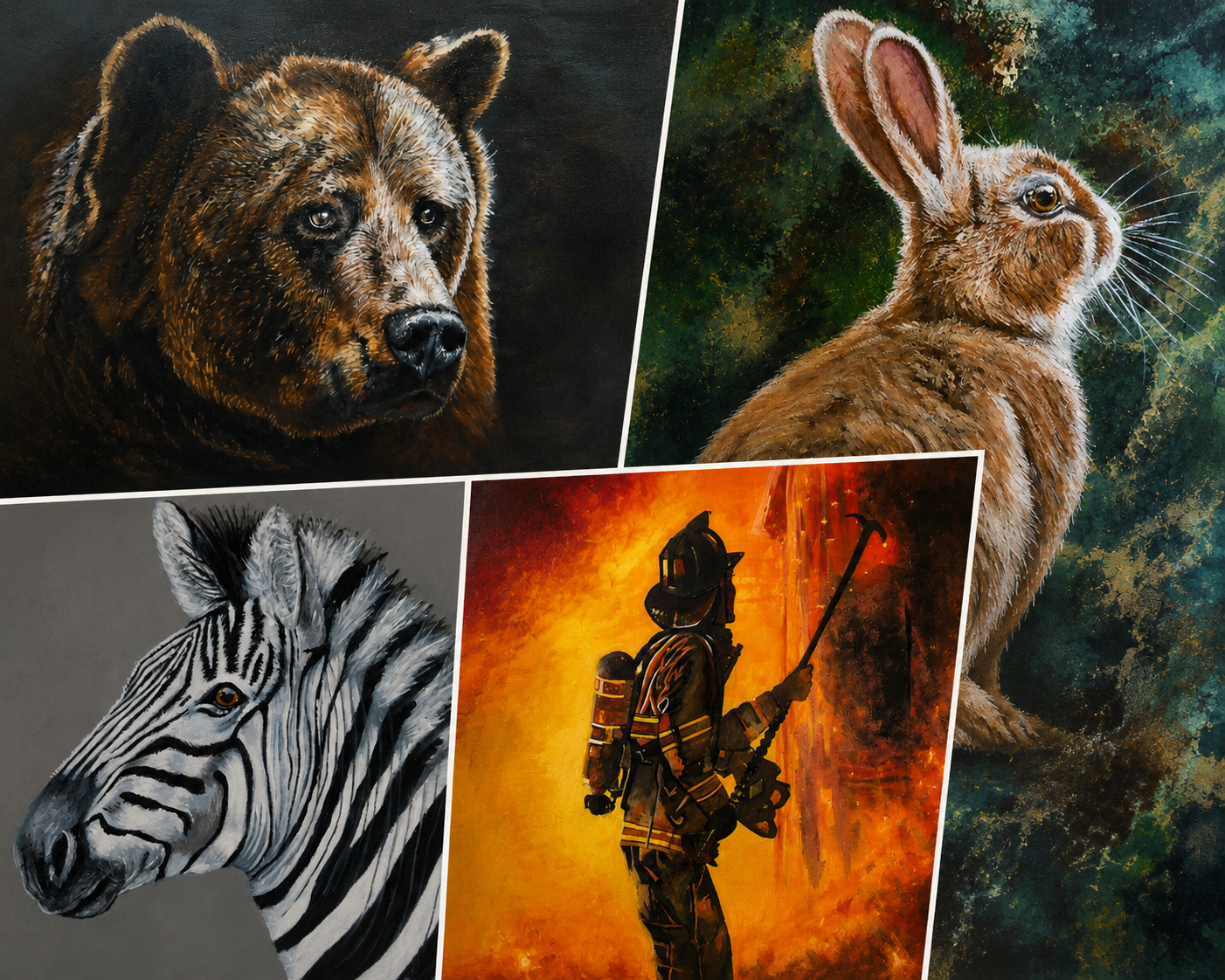
I’ve been painting for over 20 years now. I’ve had art exhibits, sold originals, prints, and cards, and even ran my own website. I advertised my work on Facebook, took breaks here and there, built a career in biology, got married, and raised my children. It wasn’t until my youngest turned 14 that I finally felt like I could breathe again — like I had time to reflect and decide how I wanted to spend my free time.
My favorite pieces are the ones I spent countless hours on — the ones I made as realistic as possible, the ones I hyper‑focused on. Those are the pieces that feel the most like me.