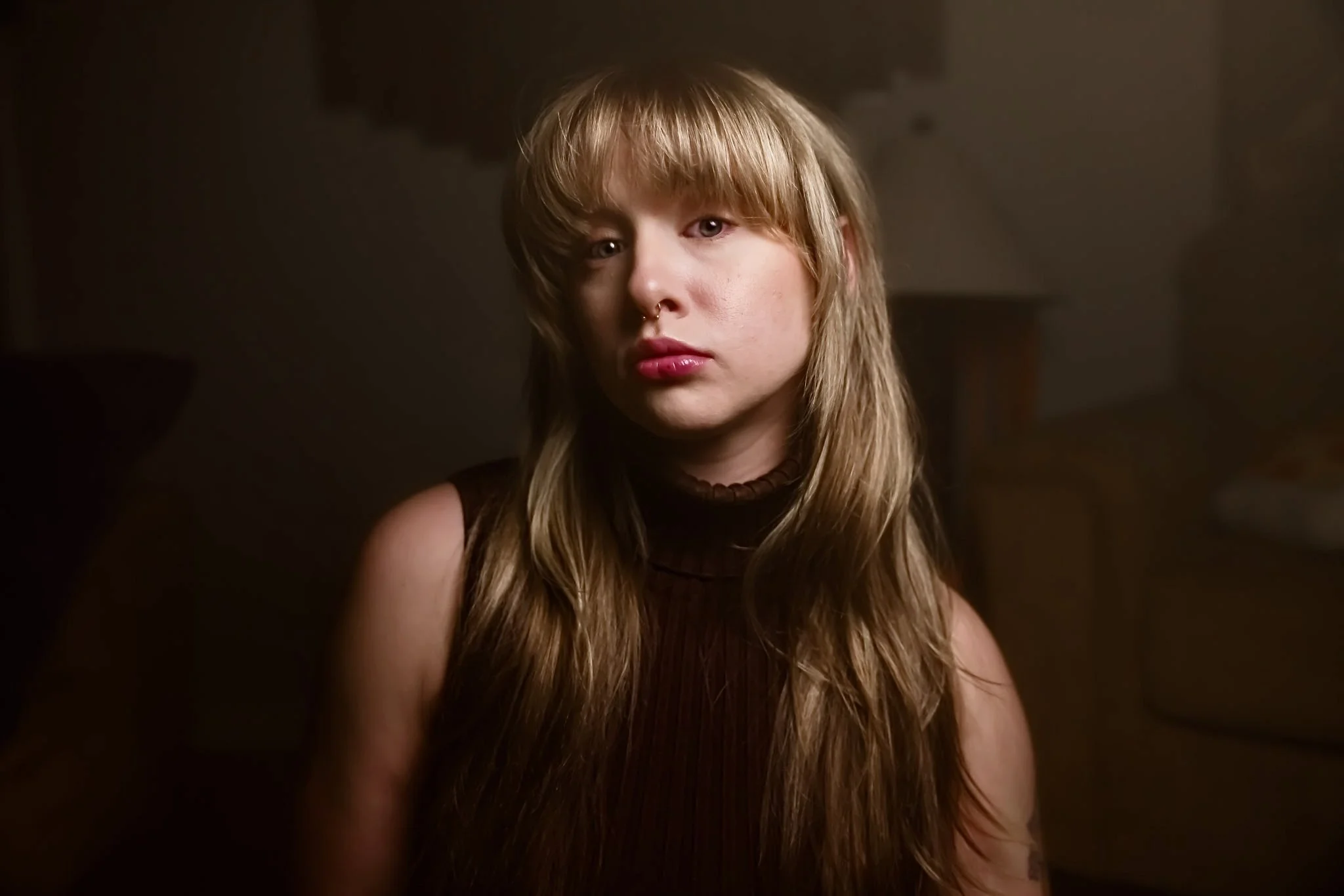
By Sarah Brewer
1. You work in many creative fields, including filmmaking, editing, sound, photography and music. Did you start with one art form, or did they all develop at the same time for you?
I started in music: I played guitar, saxophone and sang, and for a long time I was pretty convinced that was going to be the thing. My original plan in college was to become an orchestral engineer, which feels very specific in hindsight, but at the time it made total sense to me. So, I went to school for audio engineering and music production, which felt like the natural next step. However, quickly after graduating, I fell into video and editing at my first job. That was not part of the plan at all, but it ended up being one of those “oh no, this is actually what I love” situations. Since then, I’ve basically just been chasing whatever lets me combine sound, story, rhythm, and visuals in the same place which is filmmaking.
2. What has your background in music taught you about storytelling?
Music basically teaches you everything you need to know about timing and patience, because sometimes you’re just staring at a metronome for a very long time; but seriously, it taught me rhythm and emotional pacing more than anything. You learn quickly that it’s not just about what notes you play, it’s about when you play them, and what you leave out. I think I carry that into editing a lot — I’m always thinking, “does this moment need space?” or “are we rushing past something that should actually hit harder?” Music makes you aware that silence can do a lot of heavy lifting.
3. What makes a strong editor, beyond knowing the software?
Honestly, knowing the software is the easy part — you can learn buttons. You can’t really “download vision,” though. A strong editor is someone who understands storytelling and emotion, and who can sit with a messy pile of footage and slowly figure out what the actual heart of it is. It’s a bit like solving a puzzle where half the pieces are missing and some of them are from the wrong puzzle entirely. Also, I think good editors know when to kill their darlings. Like, yes, that shot looks amazing, but does it belong here? Or are we just emotionally attached because it took six hours and a lot of caffeine to get? The best edits usually feel invisible, which is basically the goal (but also slightly ironic after how long you spent on them). The most important thing to remember is editing isn't something anyone is just born naturally amazing at. I definitely wasn’t born a savant in the art of storytelling. Becoming an editor is an acquired skill; it takes practice, repetition, and a lot of trial and error, just like anything else. You slowly start to develop instincts, but those instincts come from time spent making a lot of things that don’t work before you figure out what does.
4. When you are editing someone else’s project, how do you balance your own instincts with the director’s vision?
I usually start by trying to figure out what the director really means when they say what they want. Sometimes “make it feel snappier” can mean five completely different things depending on the person. Once I understand the intention, I try to use my instincts to support that, not override it. I’ll always bring ideas forward if I think something can be stronger, but I don’t really see editing as “my version” of the project — it’s more like helping shape their version into the best version for the screen. It’s a bit like being a translator, but for emotions and pacing instead of languages.
5. You produced and appeared in That Kind of Worked with your twin sister Samantha. What was it like creating a series so close to home and rooted in Fredericton?
It’s honestly been one of the most fun projects I’ve ever worked on, and, occasionally chaotic in the way only working with your twin can be. We’ve been really lucky to produce That Kind of Worked in Fredericton and build it in a place where people were genuinely open to letting us try things, fail at things, and occasionally succeed at things in a very unexpected way. We’ve also (as of 48 hours ago) just been green lit for another season, which is the first time I’m saying that publicly, so that’s exciting (and mildly terrifying). This time we’re taking the chaos beyond Fredericton, and across New Brunswick, which feels a little like upgrading the difficulty level of the game. Working with my twin sister Samantha is its own category of experience. There’s no formal communication system; we just kind of look at each other and already know what the problem is, which is helpful… and sometimes dangerous.
6. You have experience in many roles — producer, editor, sound, camera, stills, performer. How has that range helped you understand the filmmaking process?
It’s made me a lot more forgiving of everyone involved in filmmaking because I’ve probably been the person causing the problem in every department at some point. When you’ve worked in sound, you understand how important clean production audio is. When you’ve edited, you understand how coverage decisions on set change everything in post. When you’ve produced, you understand the constraints behind every creative decision. So overall, it just makes you more aware of how interconnected everything is. Nothing exists in isolation in film, even if we sometimes pretend it does.
7. When people look at your body of work — film, editing, sound, and music — what do you hope they understand about you as an artist?
I hope they see someone who is genuinely curious, and maybe slightly incapable of sticking to just one thing for too long, but in the best way. More than anything, I care about finding creative ways to bring ideas to life, no matter what form that takes. For me, it’s never really been about one discipline, it’s about storytelling, and figuring out the best way to make something feel engaging and (hopefully, even just a little bit) memorable. I also hope it encourages people to start things. I’ve been really lucky to have people around me who keep me motivated and basically pushed me to stop overthinking and just try things even if they weren’t perfect. If there’s one thing this industry has taught me, it’s that the only real thing holding you back is telling yourself you can’t do it. The second you decide you can (even a little bit) the rest tends to start figuring itself out quickly.